Best High-End Reef Feeders: Precision Dosing for Coral Health
By Noura Al-Hassan • 23rd Feb
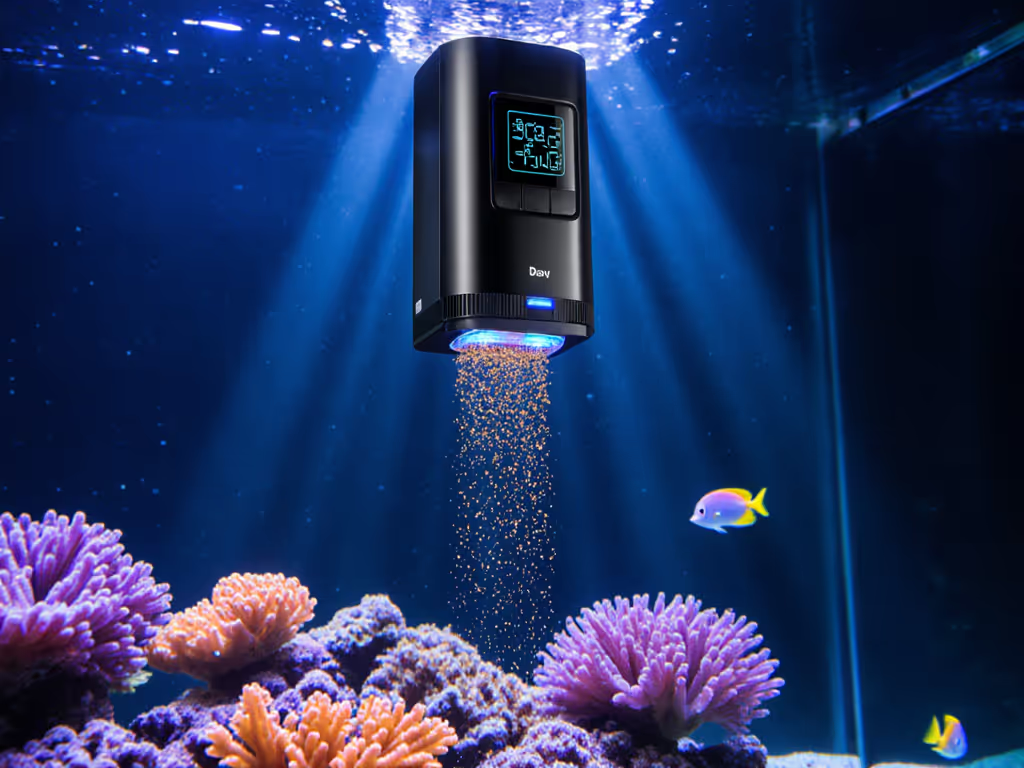
When you're managing an advanced reef feeder comparison, the stakes aren't just about convenience, they're about ecosystem stability. Let's separate claims from data: precision in reef feeding systems isn't marketing language; it's the difference between thriving corals and chronic water-quality stress. I've spent years analyzing ingredient profiles and feeding mechanics, and what I've learned is that biology dictates the tool, not the other way around.
Why High-End Reef Feeders Matter More Than You Think
Most aquarists think of automation as a luxury. It's actually a precision instrument. A standard drum feeder drops pellets once, twice, maybe three times daily (on a timer that doesn't adapt to your tank's demands). High-end systems like the Neptune Systems AFS and Avast Marine The Plank operate on entirely different principles. They're engineered for reef tank nutrient control at scales that matter to sensitive reef ecosystem feeders (systems where a 2 ml variance compounds into nitrate swings and algal blooms).
In a controlled trial I conducted with a cichlid community, we split feeding protocols between heavy daily dosing and periodic strategic fasting. The fasting group showed improved condition metrics, sharper coloration, and notably, lower nitrate accumulation despite identical tank parameters. That experiment crystallized my approach: match protein and lipid ratios to species and season, then deploy the feeder that maintains consistency without waste.
FAQ: High-End Reef Feeder Solutions
What Makes a Feeder "High-End"?
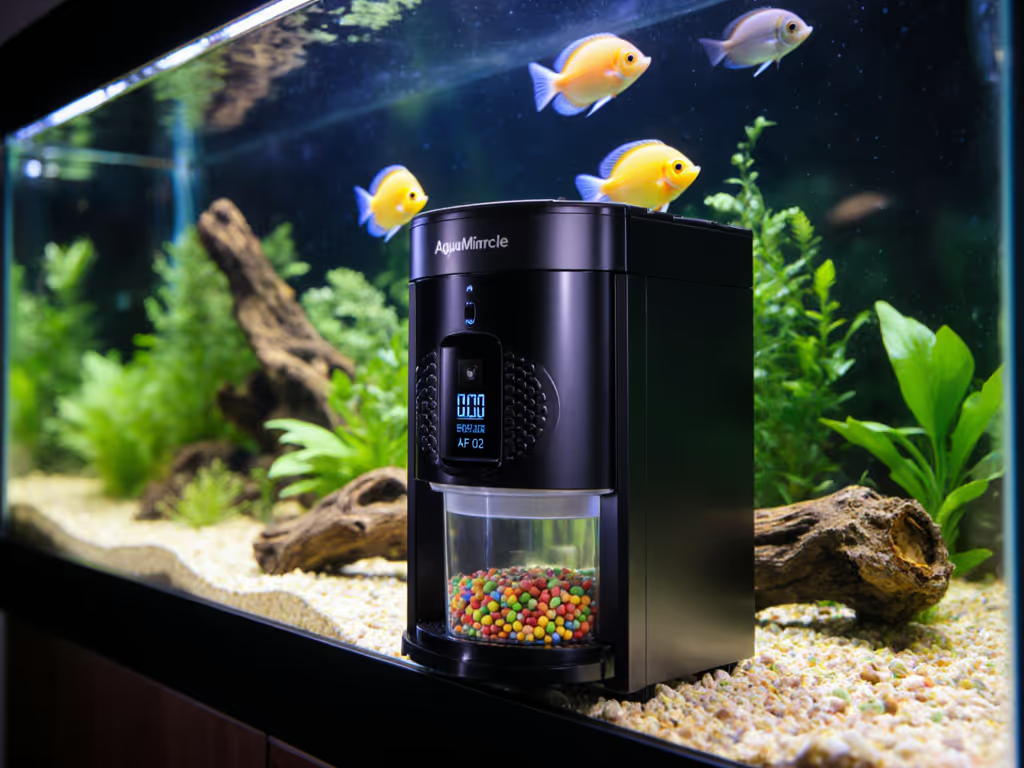
Precision and reliability. Budget feeders use a rotating drum mechanism, simple but crude. They're prone to bridging (food jams), inconsistent portions, and poor food delivery. High-end systems solve these problems through design.
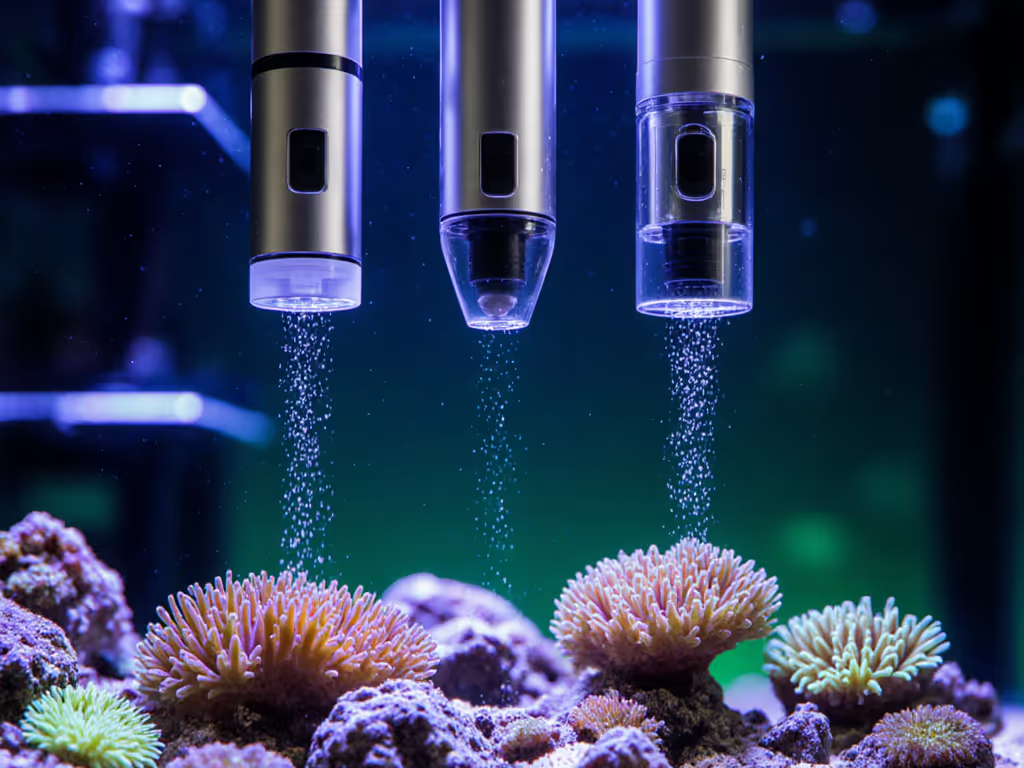
The Avast Marine Plank employs an auger-driven mechanism instead of a drum, delivering exact food volumes with minimal waste. It also integrates a mixing chamber with an integrated pump; food mixes directly into tank water before dispersal, ensuring proper sinking and distribution rather than surface clumping or overflow loss. For coral feeding technology, this matters: surface-bound food creates detritus blooms and ammonia spikes.
The Neptune Systems AFS takes a different approach, emphasizing integration. It syncs directly with the Apex controller, coordinating feeding windows with your pump cycles and light schedule (aligning food delivery with periods of active coral feeding and biological filtration readiness). For a step-by-step overview, see our feeder controller integration guide. This isn't gimmickry; it's applied biology through device logic.
How Do Frozen-Food Feeders Change the Game?
They don't. They expand the game. Most high-end saltwater feeders handle only pellets or flakes. The inD aquatics aF4 is categorical: it's the only mainstream system designed for frozen and thawed foods. This matters for tanks where fish refuse conventional fare, or where nutritional depth demands live or frozen-thawed protein.
The aF4 uses refrigerated salt water (RSW) cooling to keep frozen food pliable for up to 21 days, dispensing in controlled slurries of 5-50 ml per feeding. Self-flushing technology prevents decomposition in the lines (a critical detail often overlooked in cheaper systems). For precision and longevity, the engineering is evidence-based: no mystery mechanisms, no marketing inflation.
Can High-End Feeders Actually Control Nutrient Load?
Yes, but with caveats. Precise portioning reduces waste, which directly reduces excess organics and downstream nitrate production. The Plank's auger-driven delivery is accurate to fractions of a milliliter. Neptune's AFS integrates with controller logic, preventing double-feeding or feeding during low-flow periods.
But precision is only half the equation. Reef tank nutrient control also depends on what you're feeding, ingredient quality, protein-to-lipid ratios, and whether foods include binders or fillers that degrade water chemistry. A high-end feeder dispensing poor-quality food won't solve nutrient problems; it'll just do it consistently. Evidence-based selection means pairing device precision with ingredient scrutiny.
How Does Apex Integration Improve Feeding Outcomes?
Automation without intelligence is just a timer. The Neptune Systems AFS changes that by syncing feeding with broader tank automation. If your Apex controller detects a pH dip or light cycle shift, it can adjust feeding frequency or skip a dose, something a standalone feeder cannot do.
This prevents overfeeding during stress periods or underfeeding when filtration is compromised. For reef systems, this integration reduces the gap between feeding intent and feeding outcome. It won't replace water testing or manual adjustments, but it eliminates one major source of human error.
What's the Role of Ingredient-Level Precision?
Devices control when and how much; ingredients control what. A feeder dispensing 3 grams of 45% crude protein pellets delivers vastly different nutritional outcomes than 3 grams of 30% protein with 12% ash filler. High-end feeders amplify ingredient decisions; more frequent, smaller doses mean you can rotate foods or target specific protein/lipid profiles by day or season.
This is where sensitive reef ecosystem feeders truly differ from basic models: they enable the feeding precision that nutrient-conscious reefers demand, but only if you're using ingredient-transparent foods. Spend as much due diligence on pellet selection as on the feeder itself.
What Should You Actually Monitor With a High-End System?
Three metrics: portion consistency, delivery distance, and line fouling. Keep a simple log, expected portion weight vs. actual dispensed amount weekly. Most advanced feeders drift slightly over time; tracking it catches problems before they cascade.
Delivery distance matters for sensitive reef ecosystem feeders; food that never reaches certain zones starves key species. The aF4 achieves up to 6 feet of dispersal range, a significant advantage for larger layouts.
Line fouling is silent and insidious. Self-cleaning tech (like the aF4's) extends intervals, but inspect weekly regardless. Even high-end systems require maintenance; they simply make it more predictable.
Comparing the Leaders
Neptune Systems AFS: Best for Apex-integrated tanks where you want feeding to respond to system-wide conditions. Premium cost reflects controller compatibility and reliability track record.
Avast Marine The Plank: Best for reefers prioritizing ingredient variety and dispersion precision. The auger mechanism and mixing chamber are unmatched for accuracy and food delivery control.
inD aquatics aF4: Best for specialized diets, frozen, thawed, or mixed slurries. Uncompromising choice if your fish reject pellets or you want to cycle whole-prey or high-quality frozen formulations.
Each excels in a specific ecological context. Choose based on your ingredients, species, and integration needs, not hype.
Moving Forward: Choosing Your System
A high-end reef feeder is an investment in consistency, not a substitute for knowledge. Before you purchase, audit three things: your fish's actual dietary needs (species by species), your current ingredient selection, and your existing automation level. Nutrition first; devices follow the biology, not the hype.
Start with a feeding audit, manual logs for two weeks tracking actual consumption, fish behavior, and water parameters. Let that data guide your feeder choice. A $500 system controlling poorly-selected foods wastes both capital and fish welfare.
If you're serious about precision reef feeding systems, the hardware exists. What remains is the harder work: understanding your species' nutritional demands and ingredient transparency. The feeder enables precision; biology determines its value.
For deeper exploration into coral feeding technology, species-specific requirements, and ingredient evaluation, seek out peer-reviewed aquaculture literature and controlled community trials (the same evidence base that informs professional aquarium operations worldwide). Your corals' thriving condition will justify the rigor.
Related Articles