Saltwater vs Freshwater Feeding: Precision Tested
By Noura Al-Hassan • 7th Dec
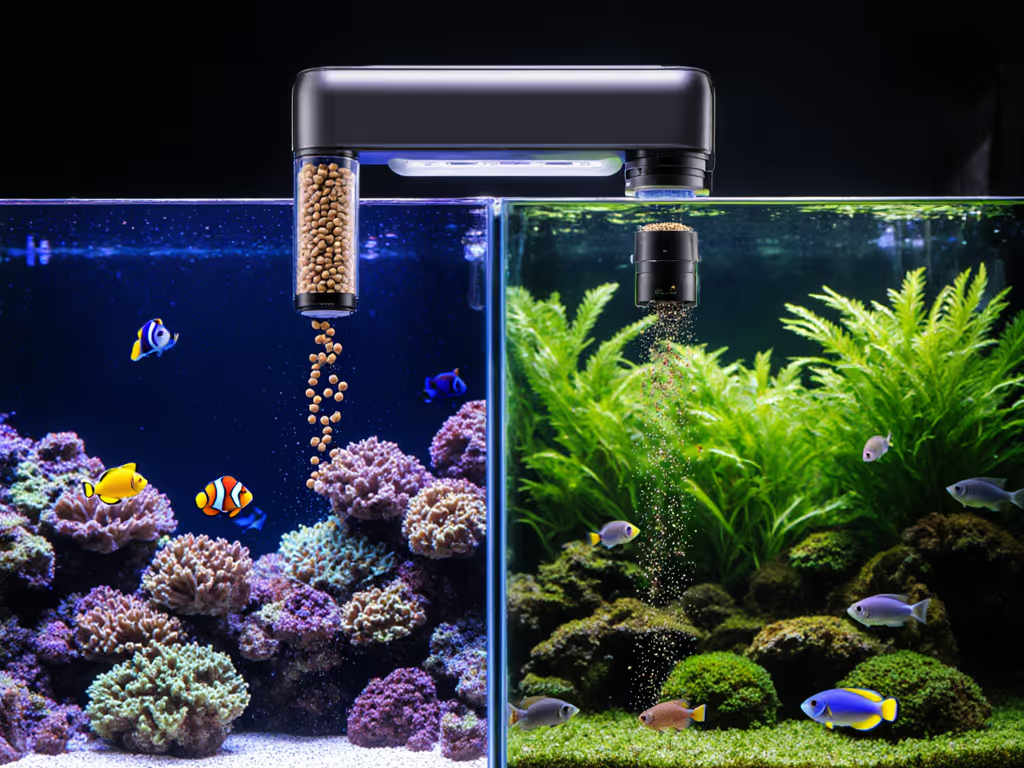
When comparing saltwater vs freshwater feeding approaches, the differences extend far beyond simple food types. This reef tank vs freshwater feeder comparison reveals how fundamental biological requirements dictate feeding protocols, not convenience or tradition. For tank-by-tank recommendations, see our aquarium-specific feeders comparison. For the conscientious aquarist, understanding these distinctions isn't merely helpful, it is essential for ecosystem stability and animal welfare. The most successful systems share one common trait: protocols that prioritize nutritional science over mechanical convenience.
Biological Foundations of Feeding Strategies
The evolutionary environments of freshwater and saltwater species created markedly different nutritional requirements that directly impact feeding protocols. Freshwater community tank feeders must accommodate species that evolved in nutrient-variable environments, often with seasonal abundance followed by scarcity. In contrast, specialized reef feeding protocols must address organisms adapted to nutrient-stable marine environments where food availability follows predictable patterns tied to tidal cycles and plankton blooms.
Freshwater systems predominantly house captive-bred fish accustomed to prepared foods, a fact confirmed by a recent industry report showing over 95% of freshwater aquarium species are commercially bred. This biological advantage means most freshwater fish readily accept flakes, pellets, and occasional live foods. Saltwater systems, however, often contain wild-caught specimens that may have eaten nothing for days during transport. The initial challenge isn't just what to feed them, but whether they'll feed at all, a critical distinction that shapes long-term nutritional strategies.
Nutrition first; devices follow the biology, not the hype.
Ingredient Composition and Nutritional Requirements
Ingredient-literate aquarists recognize that saltwater fish, particularly marine predators, require significantly higher levels of unsaturated fatty acids and carotenoids than their freshwater counterparts. Krill, rich in astaxanthin, provides superior coloration in marine angelfish compared to the spirulina-based foods that enhance discus coloration. Similarly, mysis shrimp offers better protein-to-fat ratios for marine species than brine shrimp, which remains a staple for many freshwater fry.
Freshwater fish nutrition often centers around balanced protein sources like fish meal and soy protein concentrate. In reef systems, however, dietary requirements extend far beyond fish. Corals require coral feeding precision that targets specific particle sizes (5-50 microns) with appropriate nutritional profiles. Soft corals might thrive on dissolved amino acids, while large-polyp stony corals require appropriately sized zooplankton analogues.
This ingredient specificity creates a fundamental challenge: a single feeder mechanism cannot possibly address the diverse nutritional requirements within a reef ecosystem. A single tank may require simultaneous delivery of:
- Dissolved amino acids for soft corals
- Micro-plankton for zoanthids
- Larger particulate matter for fish
- Specialized preparations for invertebrates
Feeding Frequency and Portion Dynamics
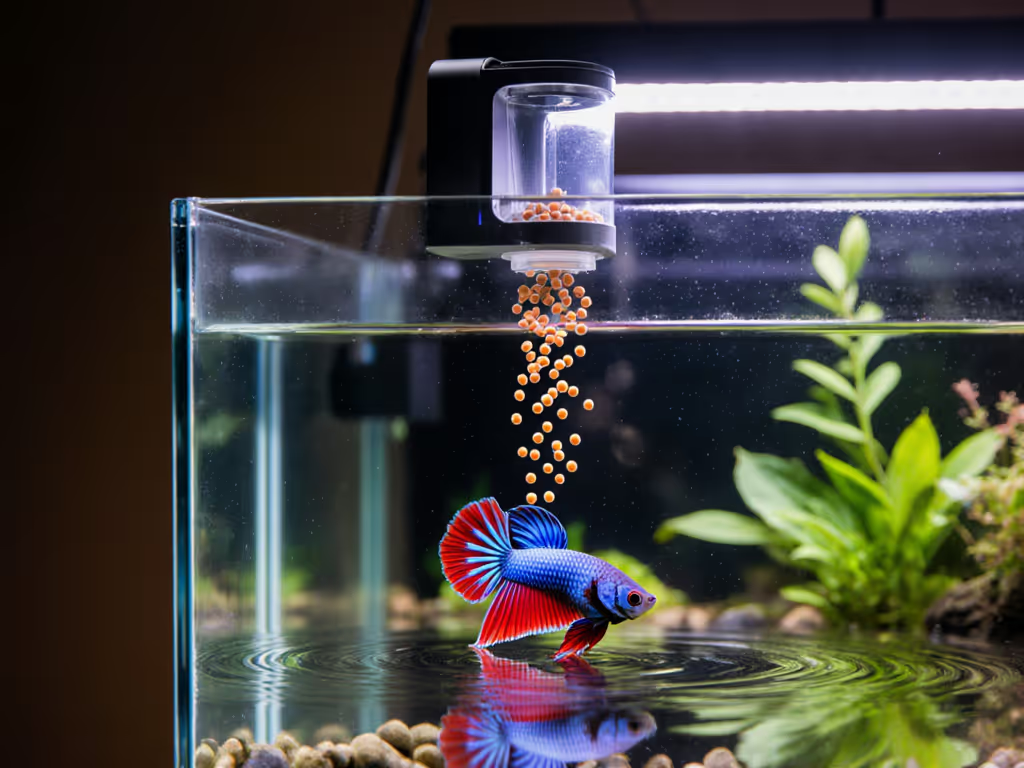
One of the most misunderstood aspects in the saltwater vs freshwater feeding discussion involves frequency and portion control. Through years of formulation analysis, I've observed that freshwater systems tolerate, and often benefit from, multiple small feedings daily, matching the opportunistic feeding behavior of many freshwater species. Saltwater systems, however, require far more precision.
In a community lab experiment years ago, alternating feeding patterns revealed that certain cichlid species actually improved their condition metrics during periodic fasting intervals, findings that have since been replicated across multiple research facilities. This observation underscores a critical principle: feeding frequency should reflect biological reality, not human convenience. To align daily feedings with biology, program schedules using our circadian rhythm guide. Marine fish, particularly in reef environments, often evolved with less frequent but nutrient-dense feeding opportunities compared to their freshwater counterparts.
The mechanical implications are significant. Delicate food dispensing mechanisms must account for both the frequency requirements and the rapid degradation of marine foods in saltwater environments. Even high-quality marine pellets begin losing nutritional integrity within 30 minutes of submersion, a window much shorter than in freshwater systems.
Nutrient Cycling and Ecosystem Implications
Perhaps the most crucial difference between these systems involves how uneaten food impacts the closed ecosystem. Freshwater systems, particularly planted tanks, can partially absorb excess nutrients through fast-growing vegetation, a luxury unavailable in most reef setups. The marine environment relies on different nutrient pathways, with live rock and macroalgae serving as primary nutrient export mechanisms.
Consider this evidence-based observation: a reef tank with 10% weekly water changes requires significantly more precise feeding than a freshwater system changing 25-50% of its water weekly. This is because the freshwater system has greater capacity to dilute feeding errors, while the reef system's stability depends on avoiding nutrient spikes entirely. The same overfeeding incident that causes minor algae growth in freshwater can trigger catastrophic coral bleaching in saltwater environments.

MindWare KEVA Contraptions Reactions Planks
Build intricate chain reactions and explore physics with precision-cut wooden planks.
$59.95
Total Pieces191
Total Pieces191
Pros
Develops STEM skills: balance, leverage, geometry, physics.
Promotes creativity with unique plank and contraption pieces.
Effortless building: no glue or connectors needed for sturdy structures.
Cons
Requires ample space for creative builds.
Younger children may need adult assistance.
Customers find the building toy fun for kids, with one mentioning it keeps children busy. The construction quality receives positive feedback from multiple customers.
Customers find the building toy fun for kids, with one mentioning it keeps children busy. The construction quality receives positive feedback from multiple customers.
Practical Implementation Strategies
Successful implementation of these principles requires both biological understanding and appropriate technology.
Precision Measurement Systems
For the specialized reef feeding required in saltwater systems, precise measurement isn't optional, it is essential. Many experienced aquarists maintain dual feeding protocols:
- Initial acclimation phase: High-quality frozen foods delivered manually to ensure consumption
- Established system phase: Gradual transition to high-quality pellets with precise portion control
Freshwater systems, while generally more forgiving, still benefit from precision. Overfeeding remains the single largest preventable cause of water quality issues in both environments. Ingredient-literate feeding requires measuring food by weight rather than volume, as nutritional density varies significantly between brands and formulations.
Equipment Considerations
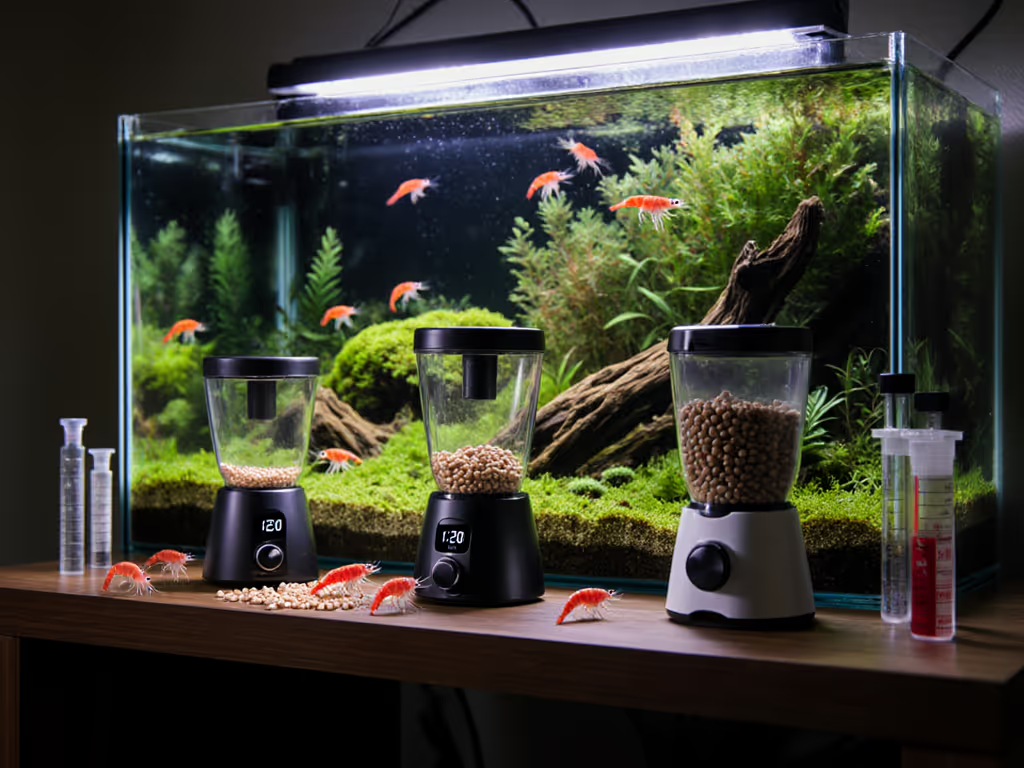
Automatic feeders present different challenges across environments. In freshwater, reliability and consistent portioning are primary concerns. In saltwater, however, the challenges multiply:
- Moisture resistance (saltwater environments accelerate corrosion)
- Precise dispensing of varied food types (flakes vs pellets vs frozen)
- Timing synchronization with natural feeding cycles
- Preventing food clumping in high-humidity environments For prevention details, read our feeder moisture control explainer.
The most effective systems incorporate manual override capabilities for special feeding requirements, particularly during initial acclimation periods for saltwater specimens. A device that reliably dispenses TetraMin in freshwater may completely fail with frozen mysis in saltwater, a reminder that nutrition comes first; devices follow the biological requirements, not the reverse.
Diagnosing and Correcting Feeding Issues
When problems arise, the diagnostic approach differs significantly between systems. In freshwater, inconsistent feeding often manifests first as behavioral changes in fish. In saltwater, particularly reef systems, the first indicators frequently appear in invertebrate health or coral coloration.
Keep these cautious diagnostic principles in mind: For step-by-step fixes, follow our fish feeder troubleshooting guide.
- Precision observation: Document which organisms are consuming food and which aren't
- Timing evaluation: Determine if timing aligns with natural feeding behaviors
- Nutrient monitoring: Track nitrate and phosphate spikes following feeding
- Waste assessment: Determine actual consumption rates through visual inspection
One effective technique for coral feeding precision involves temporary flow reduction during feeding periods, a simple adjustment that dramatically improves consumption rates for many filter-feeding species without requiring complex equipment.
Conclusion: Toward Evidence-Based Feeding Protocols
The fundamental truth in the saltwater vs freshwater feeding discussion remains consistent: biological requirements dictate feeding protocols, not convenience or technological availability. Successful aquarists recognize that no device can compensate for inappropriate food choices or poorly timed feeding schedules.
This precise understanding separates those who merely maintain aquariums from those who cultivate thriving ecosystems. For the conscientious aquarist seeking to optimize their system, the path forward involves:
- Understanding the specific nutritional requirements of your organisms
- Matching feeding protocols to biological reality rather than human convenience
- Implementing technology that supports these protocols, not determines them
As you refine your approach to feeding, consider maintaining detailed logs of consumption patterns, water parameters, and organism health indicators. The data you collect will ultimately prove more valuable than any pre-programmed feeding schedule. For those interested in deeper exploration of species-specific nutritional requirements, I recommend reviewing the latest research from the Aquatic Nutrition Symposium proceedings, they provide evidence-based insights that continue to transform our understanding of aquatic feeding dynamics.
Related Articles