Shrimp Tank Feeders: Precision Control Comparison
By Noura Al-Hassan • 3rd Mar
Understanding the Challenge
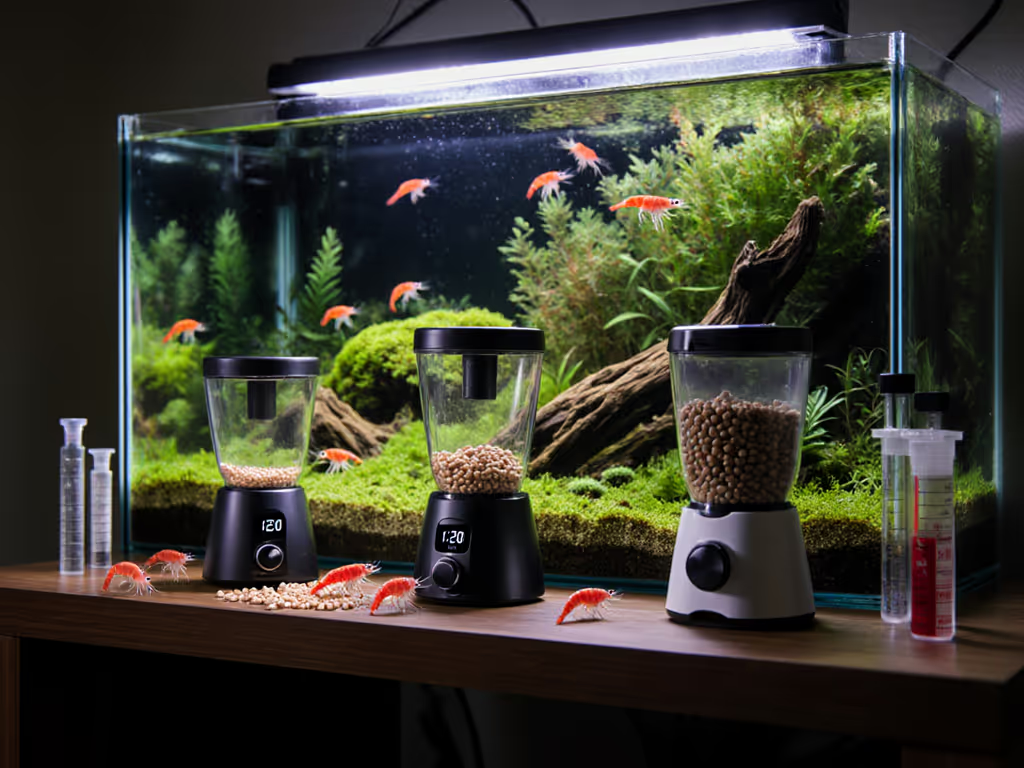
When keepers transition from manual feeding to automated shrimp tank feeder systems, they often assume the device itself matters most. It doesn't. What matters is whether the feeder aligns with what the shrimp actually need (and most feeders don't). Unlike fish feeders that dispense pellets into open water, precision feeding for shrimp demands something far more specific: controlled portion sizes, minimal waste, species-appropriate delivery, and accountability to actual consumption patterns.
I've spent years analyzing how aquarium devices translate (or fail to translate) nutritional science into practice. In a community lab trial with cichlids, we tested periodic fasting against constant feeding. The fasting groups (fed only when nutrient demand was highest) showed better condition, sharper color, and cleaner water. That experience cemented a principle I apply to shrimp now: match biology first; let the feeder follow. For the biological 'why' behind this approach, see our science-backed fish feeding guide. Yet most hobbyists invert this. They buy a feeder, then ask what nutrition it enables. That's backward.
What Makes Shrimp Feeding Different?
Feed Format Determines Control
Granules dominate the shrimp feeder market for good reason[1]. They are small enough for dwarf shrimp and juveniles, remain solid long enough to allow manual removal of uneaten food, and are trivial to portion consistently. A granule-based system (whether manual or automated) gives keepers real accountability. You can count portions, observe consumption, and adjust without guessing[1]. To match food formats with dispensing reliability, read our feeders by food type evidence review.
In contrast, powder foods and pads dissolve quickly or disintegrate into clouds, making precision nearly impossible with any automated dispenser. A powder feeder cannot tell you how much actually reached the shrimp's mouth versus the substrate or filter intake. This is where biology and device design collide: fine-particle foods are essential for filter-feeding shrimp and baby shrimp, but they're nearly incompatible with automated precision feeding[4]. Acknowledge that limitation upfront.
Species Preference and Palatability
Neocaridina and Caridina show marked differences in food preferences, a fact most feeders ignore entirely[1]. Neocaridina may ignore products that Caridina find irresistible, and vice versa. A feeder programmed to dispense the same food daily assumes all inhabitants share appetite, which they don't[1]. If your caridina shrimp feeder is releasing a vegetable-based pellet but your colony turns their backs, no automation corrects that failure.
Nutrition first; devices follow the biology, not the hype.
This is where evidence-based feeding shines. Before selecting any feeder, identify what your specific shrimp population actually consumes consistently and thrives on. Then find a feeder architecture that can handle that food type reliably.
Feeder Types and Their Trade-Offs
Automatic Gravity-Feed Hoppers
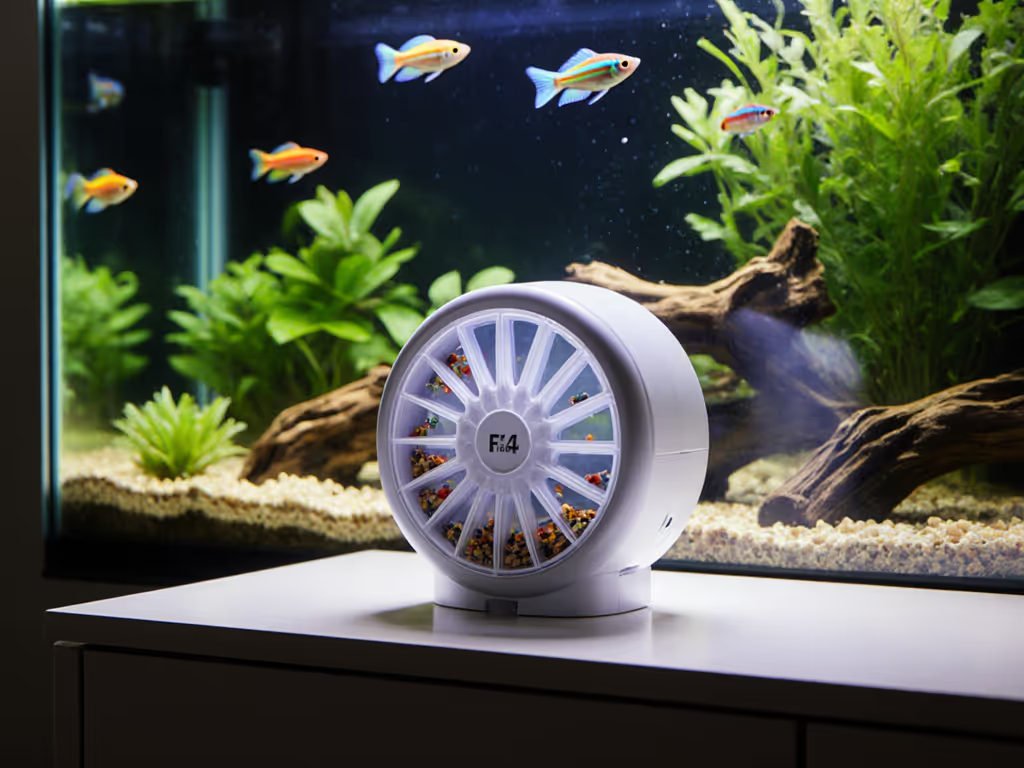
How they work: A rotating disk or timer-controlled opening dispenses pellets from a hopper into the tank at set intervals.
Advantages:
- Extremely consistent portion sizes if calibrated correctly
- Very low initial cost
- Can run on batteries or mains power for extended periods
- No complex electronics
Limitations for shrimp:
- No shutdown mechanism if food remains uneaten (design still releases the next portion on schedule)
- Granule size variability can cause jams or irregular portions
- Most designs assume fish-scale feeding (larger pellets, fewer portions)
- Cannot account for water parameter fluctuations or appetite variation
- Poor water quality control: leftover food accumulates before it can be removed
Ingredient Compatibility: Works only with neocaridina dwarf shrimp feeding schedules if the granule diameter falls in the 1-3 mm range. Anything larger or smaller tends to jam or pass through inefficiently.
Programmable Electronic Feeders
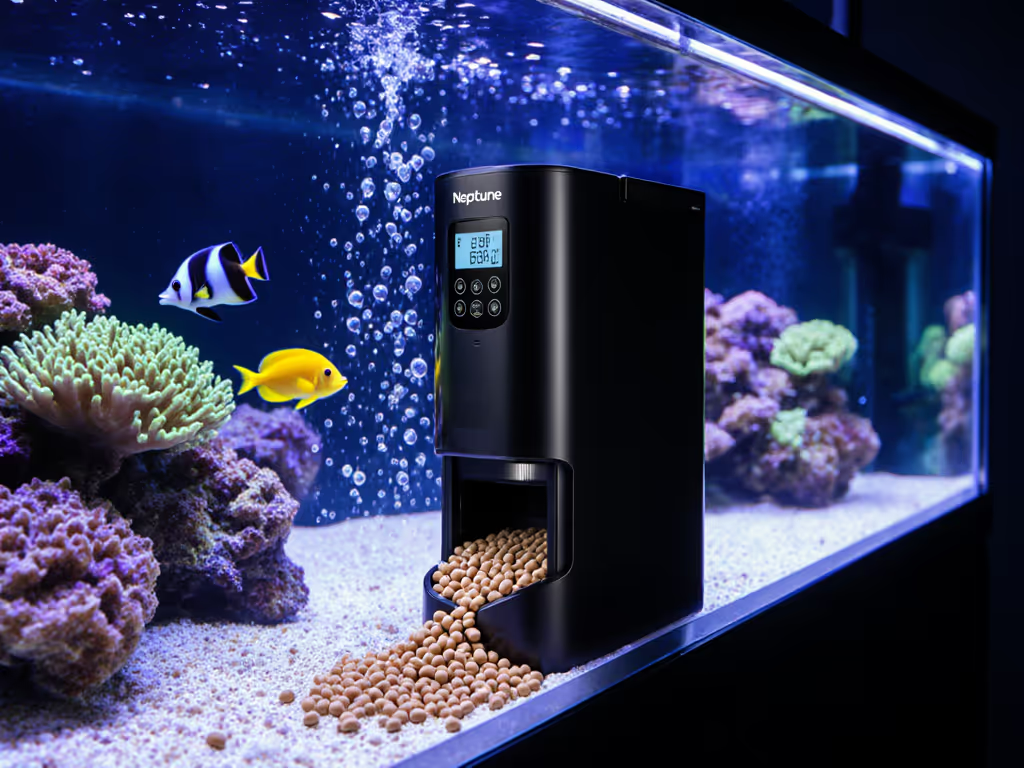
How they work: A stepper motor and microcontroller enable multiple daily feedings at programmed times, often with mobile app integration.
Advantages:
- Highly customizable schedules (feeding frequency, portion size, time of day)
- Vacation feeding becomes genuinely automated rather than hope-based
- Some models log feeding events, giving data-driven feedback
- Can simulate natural feeding rhythm (e.g., small portions in morning and evening)
Limitations for shrimp:
- Overkill if you keep fewer than three shrimp-only tanks
- Requires calibration for each food type and granule size (no universal setting)
- Initial cost is 3-5x gravity feeders
- App reliability varies; some services are region-locked or outdated
- Food particle size still limits species compatibility
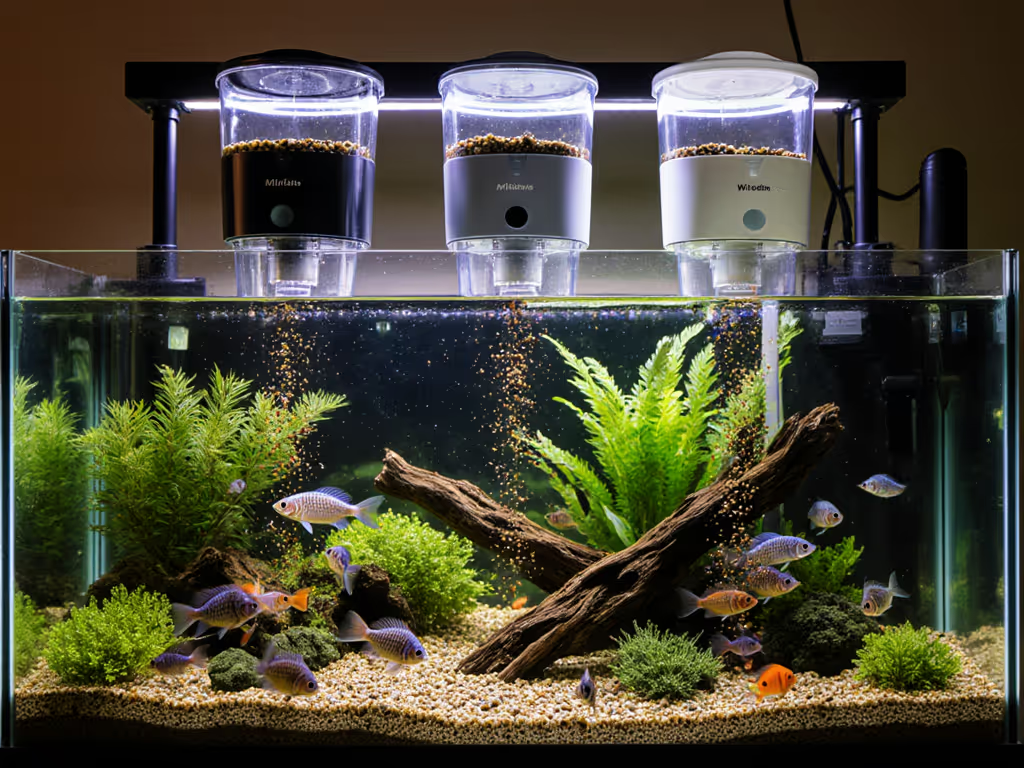
Ingredient Compatibility: Depends heavily on hopper design. Narrow hoppers suited for small shrimp granules may clog with sticky or moisture-rich foods. Verify the manufacturer's tested ingredient list before assuming it handles all pellet types.
Micro-Portion Manual Feeders (Pinch and Clip Systems)
How they work: These are not automated, they're precision tools. A calibrated scoop, clip-on container, or measuring spoon lets keepers portion exact amounts before release.
Advantages:
- Zero automation failure risk
- Ideal for micro-portion shrimp feeders needing exact control
- Immediate feedback: you see what the shrimp reject
- Compatible with all food formats, including powders and pads
- Encourages keepers to observe their inhabitants daily
- Cheapest option overall
Limitations:
- Not automated; requires manual execution 2-7 times per week
- Vacation feeding still requires a caretaker
- Inconsistent if the keeper is careless or in a rush
Ingredient Compatibility: Unlimited. A manual system works equally well with JBL granules, GlasGarten pads, Pure Nordic powders, or crushed flakes[1][2].
Hybrid Approaches: Scheduled Manual + Backup Automation
Many experienced keepers use both. They manually feed 5 days per week for observation and control, then rely on a simple gravity feeder for 2-day weekends or short trips. This splits the advantage: precision during high-attention periods, peace of mind during absence.
Let's Separate Claims from Data
Many feeder marketing materials claim improved fish health, color, or water quality. These claims rarely hold. What actually improves outcomes:
- Feeding the right ingredient profile for your species - not the device
- Consistency of portion size relative to tank bioload - which any system (manual or automatic) can provide
- Regular observation and adjustment - something automation tempts keepers to skip
- Removing uneaten food promptly - more challenging with some feeder designs
A precision feeder cannot redeem poor ingredient choice. An expensive automated system cannot replace weekly water testing. A flashy app cannot detect when your caridina population shifts appetite mid-season[1]. The device amplifies good husbandry; it does not substitute for it.
Matching Feeder Choice to Your System
For Dedicated Shrimp-Only Tanks
If you keep only dwarf shrimp (Neocaridina or Caridina), a manual micro-portion approach with a backup gravity feeder strikes the best evidence-based balance. Why? You can observe each shrimp's appetite, adjust portions in real time based on molt cycles or breeding activity, and verify that food quality and palatability remain high. Feeding 3-4 times per week manually takes 2 minutes per feeding. Automation here is premature convenience masquerading as control.
For Community Tanks with Shrimp
Shrimp in community tanks often subsist on uneaten fish food and biofilm and may not need supplemental feeding[5]. If you do choose to feed them, a gravity feeder set to release very small portions (0.5-1 g) once or twice per week works well. See distribution strategies in our community tank feeder comparison. The shrimp's reduced reliance on the feeder means feeder failure is less catastrophic[5].
For Vacation Coverage (1-2 weeks)
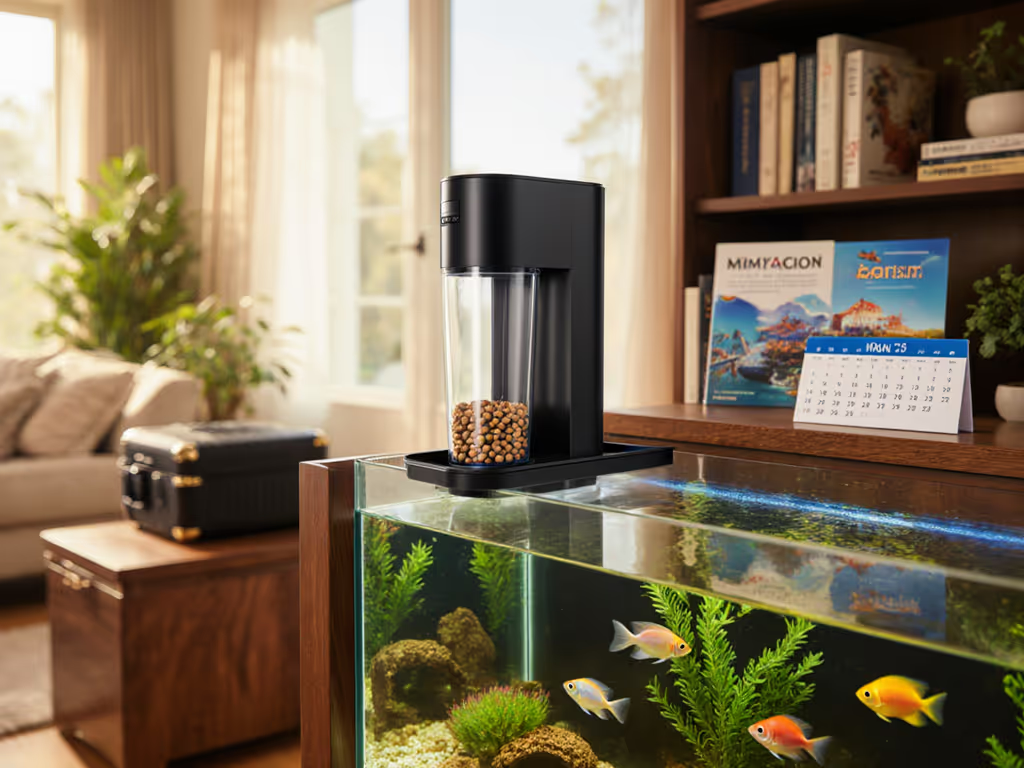
A calibrated gravity feeder with slow-dissolving granules is your best tool. Our 14-day test of vacation options compares feeders, blocks, and sitters in a vacation feeding reliability study. Why slow-dissolving? It buys time for uneaten food to be spotted (by you before you left, or by your caretaker during the interval). Fast-disintegrating foods (powders, soft pads) become invisible debris in a feeder-only scenario[1].
For Filter-Feeding Specialized Species
Bamboo shrimp and vampire shrimp cannot be fed via standard pellet feeders; they require suspended fine particles that the feeder would need to aerosolize or dissolve[4]. For these species, feeding via manual powder dispersal or natural biofilm maintenance is the only evidence-based option. Automation here simply does not exist in a useful form.
FAQ: Common Misconceptions
Q: Won't an automated feeder improve my shrimp's health?
Not inherently. A feeder improves consistency of feeding time and portion, nothing more. Health depends on ingredient quality, species-appropriate nutrition, and water quality. These remain your responsibility, feeder or not.
Q: Can I use a fish feeder for my shrimp?
Possibly, if granule size is small enough. But fish feeders are tuned for larger portions and faster feeding rhythms. Test any fish feeder on your specific shrimp population before relying on it. Expect waste and rejected portions.
Q: What if I overfeed with an automated feeder?
Automated systems make overfeeding invisible. With manual feeding, uneaten food is obvious. With automation, debris accumulates in the substrate or filter before you notice. This is why accountability matters: manual feeding forces observation, automation invites neglect.
Q: Is a fancy app-based feeder worth the cost?
Only if you keep multiple tanks with different species and schedules. For a single shrimp tank, the cost-to-benefit ratio is poor. The most expensive feeder cannot replace weekly water testing or observation.
Moving Forward
Choosing a feeder means rejecting the premise that the device is the solution. It isn't. Start with these evidence-based steps:
-
Identify your shrimp species and their verified food preferences. Consult keeper reports and peer data, not marketing[1][2].
-
Test a manual or micro-portion approach for 4 weeks. Log consumption, water parameters, and visible shrimp condition.
-
Only then consider automation, and only for the specific gap (usually vacation coverage) that manual feeding cannot fill.
-
Select a feeder based on the granule size and density of your chosen food. Don't choose food based on what your feeder accepts.
This inverted process (biology first, then devices) is slower than shopping for the fanciest automatic feeder. It is also far more likely to yield thriving shrimp and the peace of mind your hobby deserves.
Related Articles