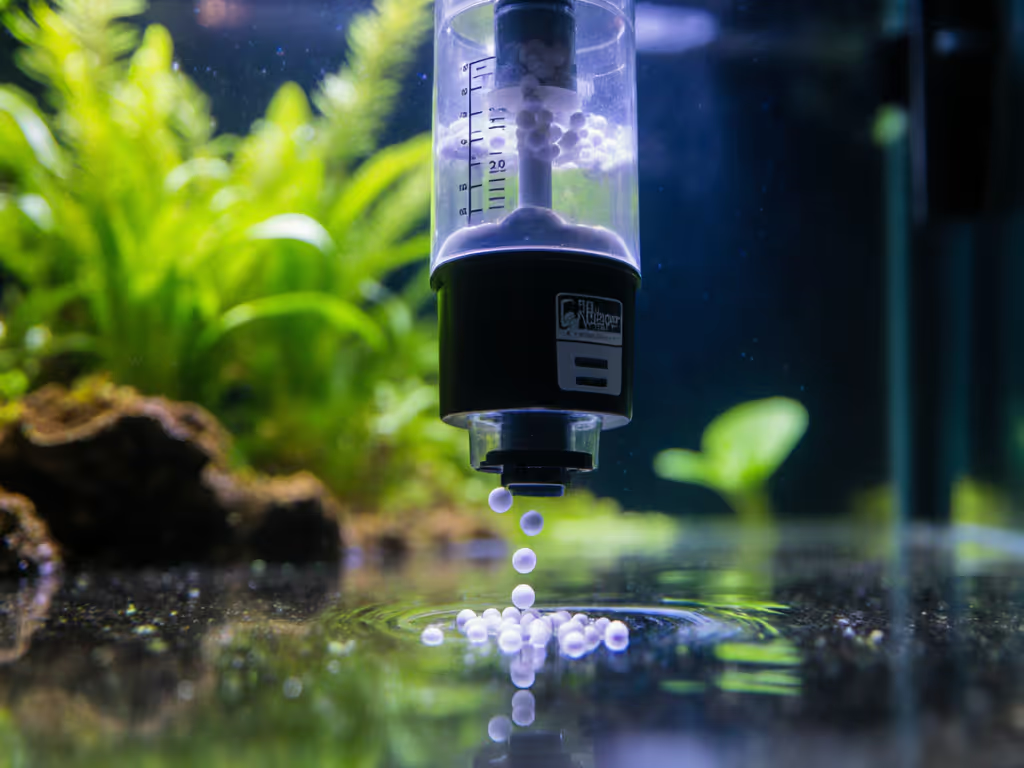
Turtle vs Fish Pond Feeders: Essential Differences for Healthy Ecosystems
By Mei-Lin Zhou • 10th Dec
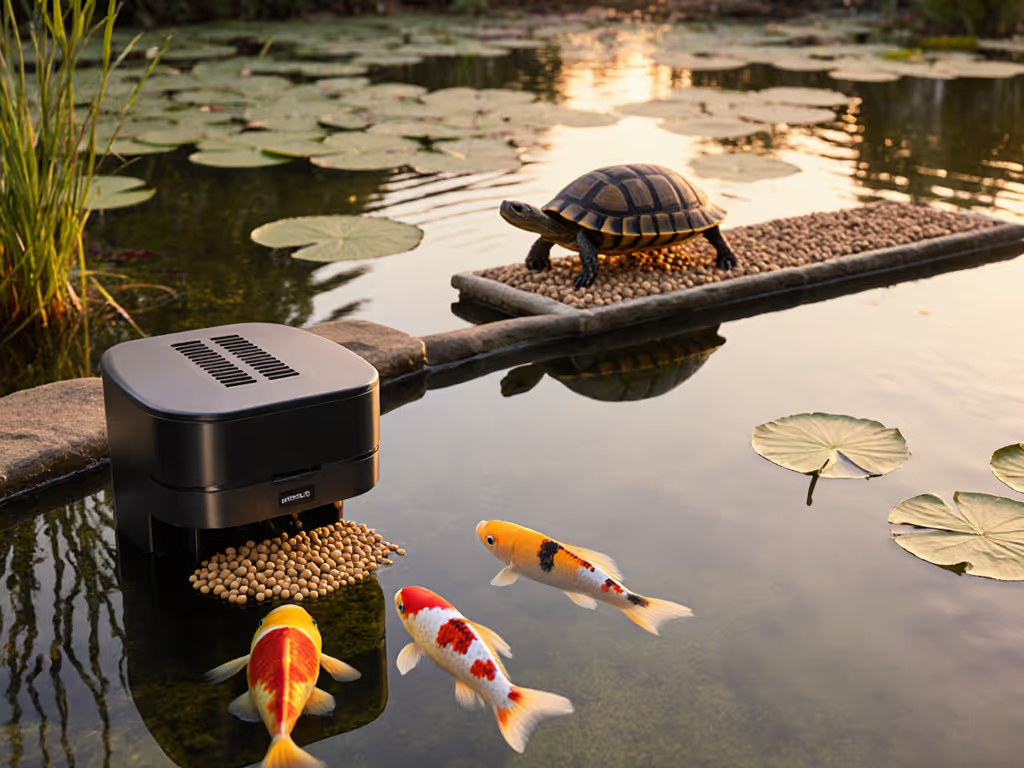
When you stand by your pond, that gentle plink of a fish pond feeder scattering flakes might seem identical to what a reptile pond feeder delivers. But beneath the water's surface, these routines create wildly different ecosystems. Many conscientious keepers unknowingly stress their turtles by using standard fish feeders (until water clouds, pellets pile up, and sluggish behavior sets in). Let's clarify why matching your feeder to your inhabitants' biology isn't just technical, it is foundational care. Observation-led routines keep ecosystems thriving and reduce keeper stress, whether you're managing a single turtle or a mixed-species pond. If you're unsure how pond feeders differ from aquarium units, read our pond vs aquarium feeder guide.
As a mentor to new aquarists, I've seen how mismatched feeding tools fracture the delicate balance hobbyists work so hard to create. A neighbor's child once cried when her guppies vanished in cloudy water (she'd loved them too much with flakes). We restored clarity through restraint: fasting, tiny pinches, a pea, and a timer. Seeing those curious fish return taught her family that restraint becomes care. With turtles, that lesson runs deeper. Their metabolism and feeding mechanics demand precision fish feeders simply can't provide. Here's how to choose wisely.
Why Can't I Use My Fish Feeder for Turtles?
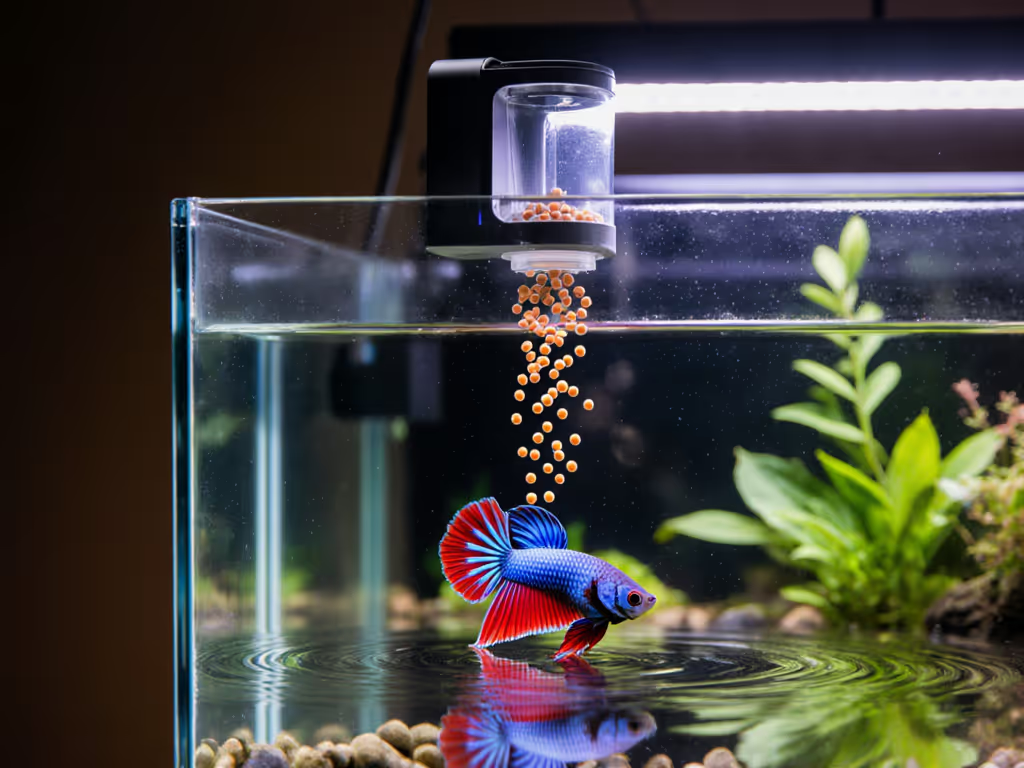
Fish feeders prioritize dispersal: flakes and small pellets scatter widely to feed schooling fish. Turtle feeding requirements, however, hinge on targeted delivery. Turtles are deliberate hunters; they expect food to sink or sit where they can approach it. Standard fish feeders eject food too high or broadly, causing:
- Wasted food sinking into gravel (where turtles rarely forage)
- Pellet fragmentation from high-velocity ejection (turtles prefer whole pellets)
- Water pollution as uneaten crumbs dissolve
Turtles also eat 2-5 times less frequently than fish but require larger, protein-rich meals. A fish feeder's tiny daily portions leave turtles hungry, while their 4x per day schedule forces unnatural grazing. Remember: turtles aren't just scaled fish. Their biology demands tools respecting their pace.
How Do Feeder Mechanics Differ for Reptiles?
Pellet Handling: Size and Stability Matters
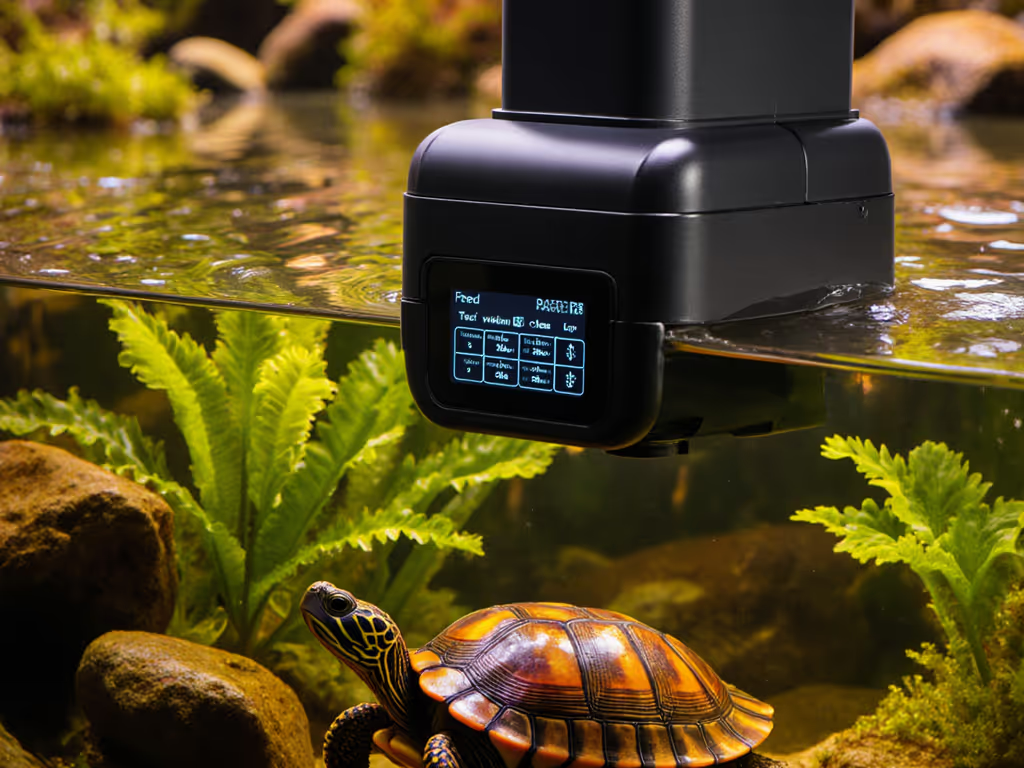
Most turtle food dispensers feature wider chutes (5-8 mm vs. fish feeders' 2-3 mm) to accommodate ReptoMin sticks or Zoo Med pellets. Crucially, they rotate downward (not sideways) so pellets drop intact into water. As one engineer-hobbyist noted, "My fish feeder's horizontal spin shattered turtle sticks; the Exo Terra's vertical drop lets them land whole." This prevents crumbling, which fouls water faster than whole pellets. For pond-specific placement, compare floating vs submerged feeders to ensure turtles can access sinking pellets.
Night Functions: Critical for Reptile-Safe Pond Feeding
Fish feed daily at dawn/dusk, but turtles sleep 12+ hours. Outdoor reptile feeders like the Zoo Med Turtlematic include a mandatory 12-hour sleep mode, preventing overnight waste. Standard fish feeders lack this, risking decay from midnight feedings. One club member left his fish feeder running on vacation: "By day three, the pond smelled like rotten eggs. Turtles ignored the flake clouds, it was food they couldn't hunt."
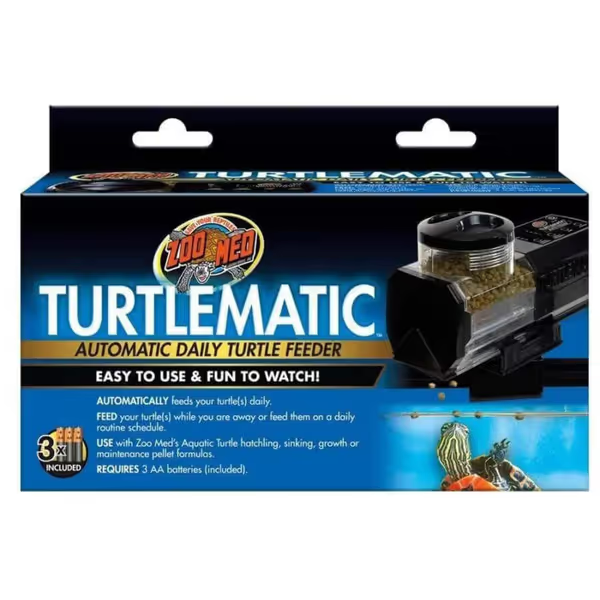
Zoo Med Turtlematic Automatic Daily Turtle Feeder
Automates turtle feeding, ensuring routine meals and peace of mind.
$28.09
Feeding ScheduleDaily automatic feeding with 12-hour sleep function
Feeding ScheduleDaily automatic feeding with 12-hour sleep function
Pros
Reliable daily feeding, great for vacations.
Works well for stick-type food for multiple turtles.
Flexible 360-degree tank mounting.
Cons
Tends to dispense excessive food.
Durability issues with mounting brackets, poor battery life.
Customers find the turtle feeder works well, with one noting it reliably augurs stick-type food and another mentioning it's perfect for multiple turtles. However, the food supply is problematic, with several customers reporting it gives out too much food.
Customers find the turtle feeder works well, with one noting it reliably augurs stick-type food and another mentioning it's perfect for multiple turtles. However, the food supply is problematic, with several customers reporting it gives out too much food.
What Happens If I Force a Fish Feeder for Turtles?
Short-term, you'll see stunned behavior: turtles nipping at floating crumbs but ignoring pulverized pellets. Long-term, consequences escalate:
- Water quality crashes from dissolved pellets (ammonia spikes in 48 hours)
- Shell/bacterial infections as turtles root in decaying debris
- Obesity in fish competing for scattered turtle food
A retired biologist shared his pond's near-collapse: "I used a Fish Mate F14 for red-eared sliders. It ejected flakes relentlessly. Within weeks, bluegill grew bloated while turtles grew lethargic. Test kits showed nitrates at 80ppm." Only after switching to a reptile-specific feeder did his ecosystem stabilize. Turtle food dispensers regulate portions by species need, not generic schedules.
How Do I Choose the Right Feeder for Mixed Ponds?
For ponds housing both turtles and fish (e.g., goldfish with softshell turtles), prioritize reptile pond feeders with adjustable output. For goldfish and koi schedules in outdoor ponds, see our koi feeding essentials. Here's why:
- Turtles dominate the food chain (they'll outcompete fish for sinking pellets)
- Fish adapt more easily to limited feeding windows than turtles do
- Reptile feeders often have dual chambers (e.g., Exo Terra's 200ml capacity) for separate fish/turtle foods
Start small, observe closely, let the fish teach you. Place turtle pellets near basking docks and fish flakes mid-pond. Watch for 3 days: if fish snap turtle food, switch to a 2-compartment feeder. If turtles ignore flakes, remove fish portions entirely. Here's a routine you can repeat: feed turtles at noon, fish at dawn/dusk using separate timers.
Can Technology Bridge the Gap?
Modern reptile pond feeders integrate smart features fish models lack: For why humidity management matters outdoors, see our deep dive on feeder moisture control.
- Humidity control (e.g., Eheim's drying fan prevents pellet clumping)
- Variable rotation counts (1-8 rotations per meal for portion control)
- Battery-buffered memory (maintains schedule during rain-induced outages)
But avoid overcomplicating. I favor simple routines and gradual tech adoption. One retired IT specialist shared success with a basic Zoo Med Turtlematic: "I set it for two noon feedings. The 360° mount lets me angle it toward their basking spot. No apps, no wires, just reliable pellets where they hunt." For vacation care, never fast turtles over 7 days; instead, use a reptile feeder's verified 14-day capacity like the Fish Mate F14 (used for turtles at half-output). Traveling soon? Start with our 7-day vacation feeder reliability tests to plan coverage without overfeeding.
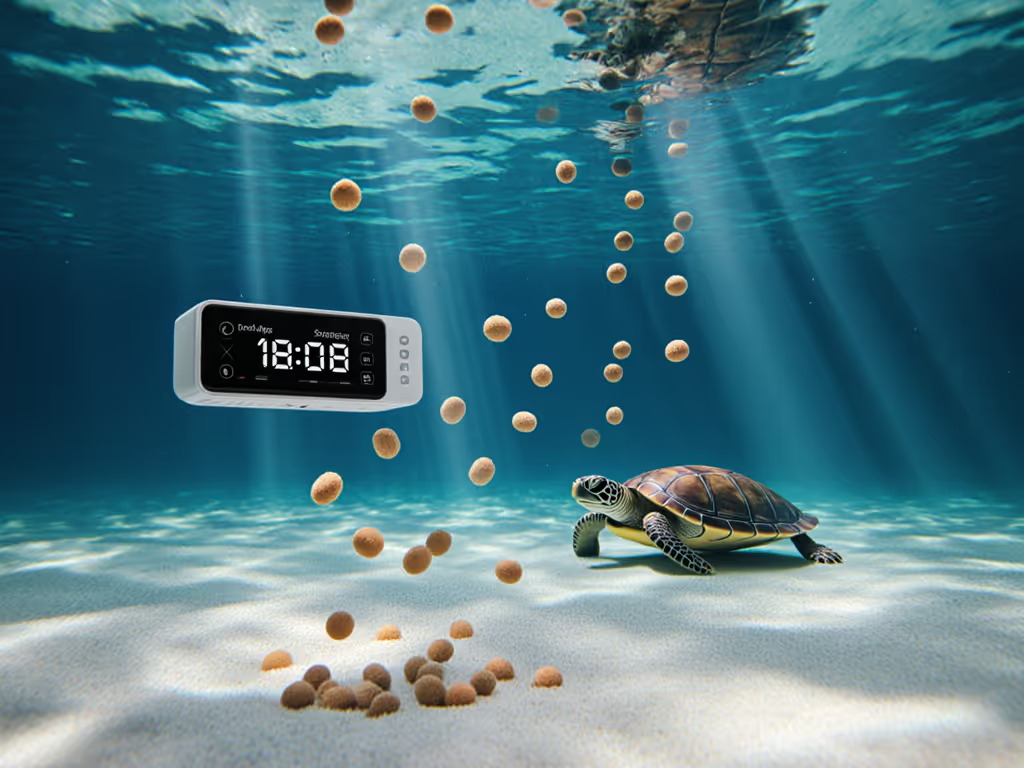
Building Your Observation-First Routine
Your pond's health starts with reading cues, not gadgets. Each morning, note:
- Water clarity (cloudiness = overfeeding or wrong feeder)
- Pellet remnants after 15 minutes (more than 5 pellets = reduce portion)
- Behavior shifts (lethargy = poor digestion; frantic searching = hunger)
Then adjust. If using a fish feeder historically, switch to a reptile model and fast one day. Compare the next morning's water. You'll often see dramatic clarity, a living lesson in restraint. Remember my neighbor's child? She now checks her tank's clarity before feeding, whispering, "Clear water means happy fish." With turtles, that clarity is even harder-won but equally vital.
Final Thoughts: Care Through Consistency
Choosing between fish pond feeders and reptile pond feeders isn't about preference, it is aligning tools with biology. Turtles thrive on measured abundance, not constant grazing. A quality reptile pond feeder respects their rhythm: fewer meals, whole pellets, zero night feedings. This isn't a limitation; it is precision care that protects your entire ecosystem.
Begin with one small change: observe your current feeder's output. Does it scatter or sink? Shatter pellets or deliver them whole? If you're new to reptile tools, research the Zoo Med Turtlematic's night function or Exo Terra's rotation settings. Better yet, visit a local club clinic (I'll be there sharing beginner-proof routines). Start small, observe closely, and let those clear waters become your daily reward.
Related Articles