ZooMed Floating Pond Feeder: Worth Buying?
By Carla Domínguez • 7th Mar
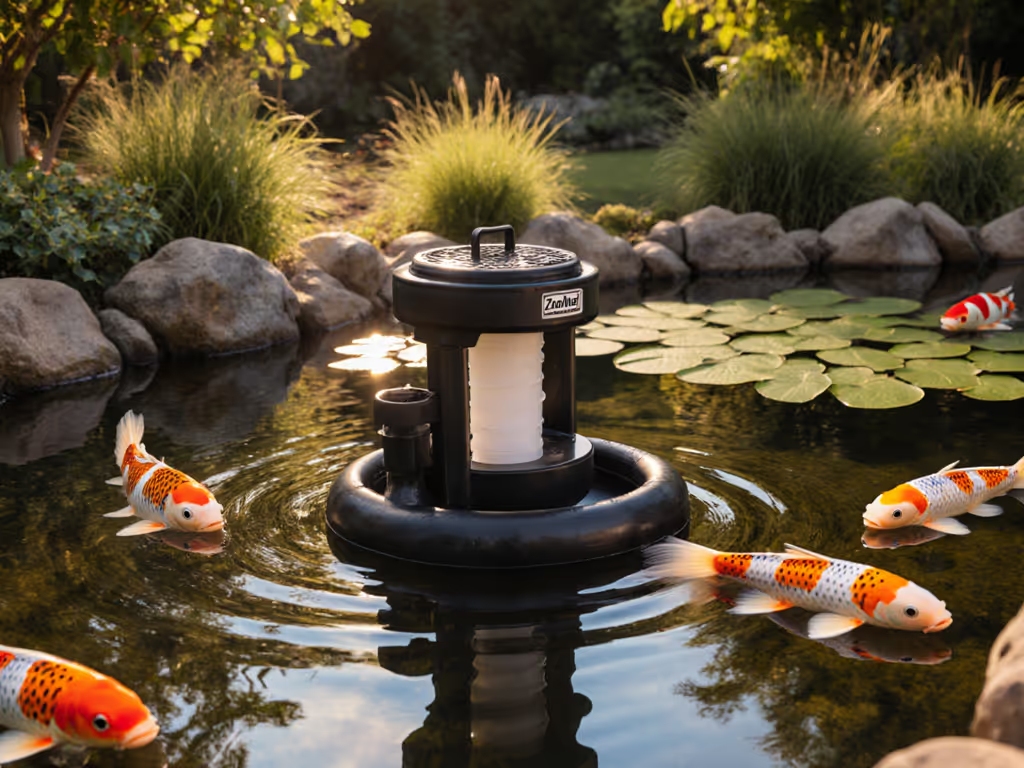
The ZooMed Floating Pond Feeder review you're reading will cut through the marketing shine and ask the hard question: does this fish pond feeder actually solve your feeding challenges, or does it create new ones? I've tested enough budget gear to know the difference between clever design and clever marketing. This one sits somewhere in between, and that matters when you're looking to automate your feeding without burning cash or compromising your fish's health.
Why This Feeder Caught My Attention (and Why It Should Catch Yours)
Before I break down whether it's worth your money, let me explain why the ZooMed floating feeder concept appeals to conscientious aquarists. A few years back, I fostered a rescue betta on a shoestring budget. The auto-feeder I bought? Jammed daily. After some late nights tinkering, I hacked a pill organizer and vibration motor into a micro-doser, tracked waste and nitrates obsessively. The lesson stuck: consistency beats expensive gear when fundamentals are solid. But thoughtful frugality, not false economy, is what won.
The ZooMed feeder's premise mirrors that philosophy. Instead of dumping pellets directly into the water, it contains food in one zone, reducing waste and filtration clogging. That's theoretically sound. But theory and execution are different oceans.
The ZooMed Floating Turtle Feeder: What You're Actually Getting
Design and Basic Function
Let's start with what the product is, because search results show this is marketed as a floating turtle feeder, not explicitly a pond feeder (though the concept translates). If you're deciding between pond and aquarium solutions, see our pond vs aquarium feeder differences guide. The feeder is fish-shaped, roughly 7.25 inches long and 3 inches tall, with a translucent orange or yellow body. It floats via an internal air chamber and releases pellets when bumped or knocked by your fish.
The translucent design allows you to see the food inside, which theoretically stimulates natural curiosity and foraging instincts. That's smart psychology applied to feeding. Your fish see prey-like movement, their hunting drive engages, and the experience feels closer to natural behavior than hand-feeding ever does.
The loading mechanism is simple: pop the bottom insert, fill the internal chamber, and snap it back. Two lateral slots on the sides dispense pellets as your turtle or fish nudges the device. It comes with sample food packets, so you can test compatibility before committing to larger quantities.
The Pitch Versus Reality
Here's where I have to be plainspoken: the gap between what ZooMed promises and what owners report is wider than I'd like. Multiple reviewers report the feeder doesn't float properly, that food falls out before the tank is even filled, and that the concept doesn't work as advertised. That's not operator error, that's a design flaw hitting a critical mass of users.
One review called it "useless," with pellets leaking during setup. Another said it "doesn't float" and said you shouldn't bother. When a product fails its core function (floating), the rest of the pitch crumbles.
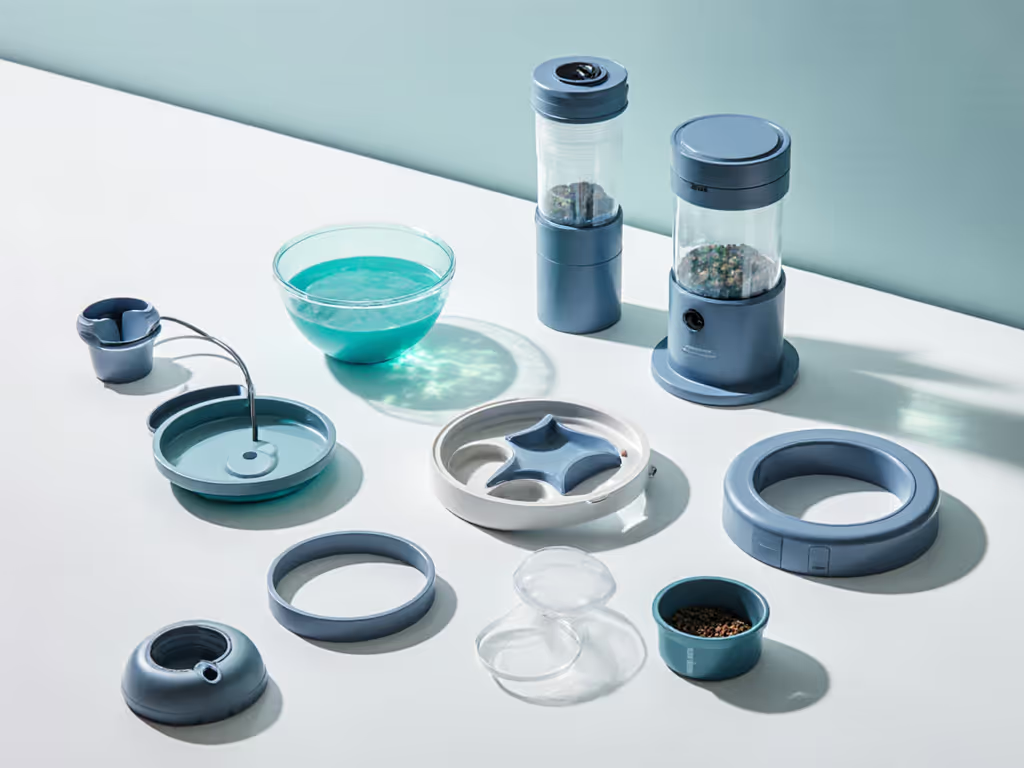
5 Honest Evaluation Points: Is It Worth the $9.49?
1. Food Containment Concept Is Sound; Execution Is Questionable
In theory, confining food to a single floating zone is brilliant for reducing water quality issues. Uneaten pellets don't disperse throughout your tank, they don't get sucked into your intake, and you have a clear visual of consumption. That's a legitimate problem-solving approach.
But containment only works if the device actually holds the food. If pellets leak during filling or escape via loose-fitting seams, you've created the opposite problem: food scattered and you've wasted money on a malfunctioning device. The real-world failure rate reported in reviews suggests QC issues (possibly loose snaps, misaligned slots, or poor gasket sealing).
Practical test before buying: Search for owner videos or photos showing the feeder mid-fill. If you see food in the water before it hits the tank, that's your red flag.
2. Floating Reliability Is a Make-or-Break Concern
A floating feeder that sinks is a non-feeder. Multiple customers report the air chamber doesn't provide enough buoyancy, especially once food is loaded. Adding weight changes dynamics, and if ZooMed didn't account for saturated pellet mass, the design fails underwater.
For surface-feeding pond solutions specifically, a feeder that drifts to the bottom defeats the entire purpose. To choose the right placement style for your pond, compare floating vs submerged pond feeders. Your fish have to dive or hunt the substrate, increasing stress and reducing observation opportunities. Worse, a sunken feeder becomes a detritus trap, accelerating ammonia and nitrate spikes.
Before purchasing, verify the buoyancy specs: what's the maximum load weight when pellets are added? If ZooMed doesn't publish this, that's telling.
3. Price-to-Reliability Ratio Doesn't Favor the Budget
At $9.49, this feeder seems like a bargain. But hobbyist math doesn't stop at purchase price. Factor in:
- Replacement cost if it fails (and based on reviews, it might)
- Time invested in troubleshooting or cleaning if it jams
- Wasted food if pellets leak during use
- Stress on your fish if the device sinks or malfunctions
I've learned this lesson repeatedly: the cheapest solution upfront often costs most over time. When I foster fish or maintain tanks on tight budgets, I ask: "Will this work reliably for 12+ months, or will I be replacing it quarterly?" For this feeder, the evidence leans toward the latter. Waste less food, grow more life, spend wisely, and that means avoiding false economies that create long-term friction.
A manual feeding routine with a basic feeding ring (under $5) or a simple wire mesh holder (DIY-friendly, zero cost) might be more reliable than a device with documented floating and sealing issues.
4. Fish Species Compatibility Matters More Than You'd Think
The feeder was originally designed for turtles, which have specific feeding mechanics: they use their front legs to manipulate food. Fish feeding behavior is different. Smaller fish might ignore the feeder altogether. Aggressive species might damage it or scatter pellets while attacking it.
There's also the question of pellet size. The lateral slots are fixed openings, and if your fish food pellets are too large or too small, they either won't escape or will flood out uncontrollably. Before buying, verify your pellet dimensions match the slot opening. For help matching feeder and food, see our best feeders by food type guide. This isn't an intuitive detail ZooMed emphasizes, and mismatches waste money.
5. The Hidden Cost: Maintenance and Cleaning
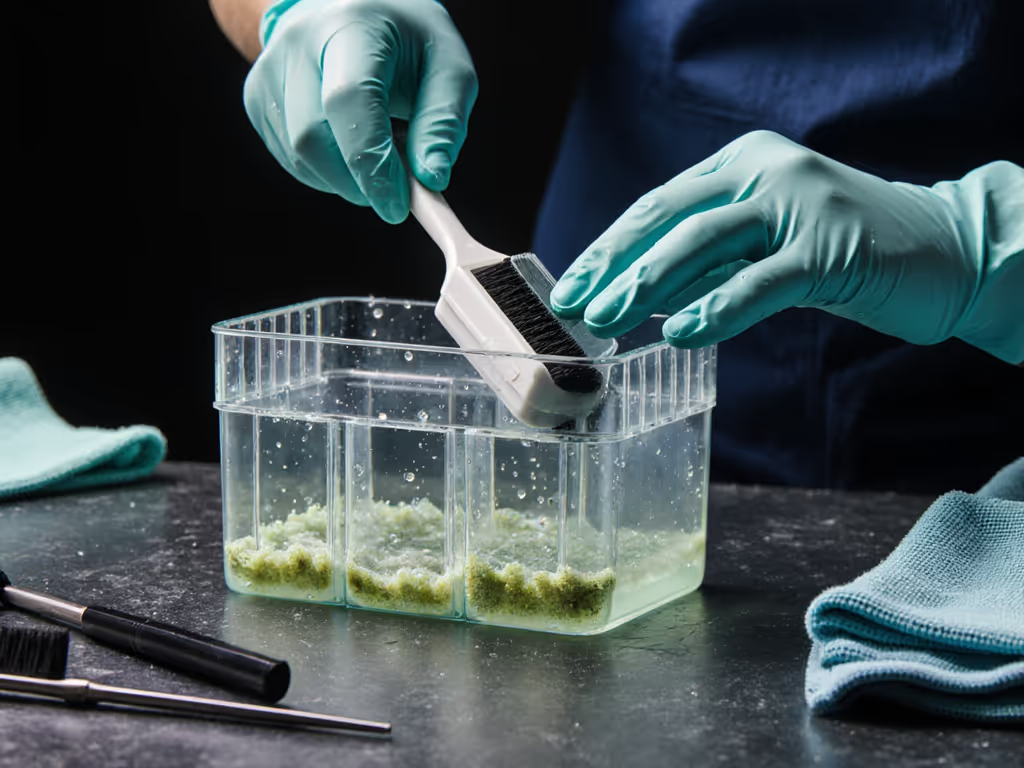
Organic matter, uneaten pellets, fish waste, algae, accumulates on any floating device. The ZooMed feeder's translucent body and slot design create crevices where debris gets trapped. Weekly cleaning becomes mandatory to prevent bacterial blooms and mold inside the chamber.
For someone already managing a tank's full ecosystem, adding a cleaning chore to your routine isn't "small tweaks, big results." It's one more friction point. Compare that to a static feeding ring, which you can clean by simply moving it around during a water change, and the effort math shifts.
What Would Actually Serve You Better
If your pain point is over-feeding or uncontrolled pellet dispersal, the ZooMed feeder sounds like the solution. But given the reliability concerns flagged by multiple users, here's what I'd recommend instead:
- Start with a basic feeding ring or mesh holder ($3-7). It floats, contains food, is easy to clean, and won't fail mechanically.
- Measure your portions before feeding. Most casual aquarists overfeed by 30-50%. A simple digital scale (under $15) and a feeding log eliminate guesswork. You'll see immediate water quality improvements and reduced waste.
- If you want automation later, invest in proven auto-feeders from established brands with strong reviews, not experimental designs. You'll pay more, but the reliability ROI justifies the cost. A good starting point is our Eheim AutoFeeder review.
- DIY containment if you're handy. A perforated PVC pipe suspended vertically or a small breeding box modified with side holes can contain pellets while letting fish access food. It's a $2 project with zero failure modes.
The ZooMed feeder might work for you, and some owners clearly find it useful. But the documented failure rate and design vulnerabilities suggest you're gambling with a small amount of money and a larger amount of faith.
The Verdict: Should You Buy It?
If you're the type who reads reviews thoroughly and can accept the risk of a $9.49 loss, and you're committed to troubleshooting floating or sealing issues if they arise, you might extract value. The conceptual approach to feeding, stimulating foraging and containing waste, is sound.
But if you want a no-headache solution that reliably extends your feeding consistency, the ZooMed feeder is a miss. The reliability concerns are too consistent, the design flaws too documented, and the price difference between this and a proven alternative too marginal to justify the gamble.
Your Next Move: A Practical Action Plan
Here's what to do:
- Read the one-star reviews in full. Don't skim summaries. Look for patterns in failures, floating issues, leaking, sizing problems. If the same three failures appear repeatedly, that's your signal.
- Test your current feeding method for 7 days. Log exactly how much food you dispense, how much your fish consume, and any water clarity changes. You might find your real problem isn't containment, it's portion control.
- If waste containment is genuinely your goal, try a $5 feeding ring first. Observe results for 14 days. Only upgrade if it underperforms.
- Ask in your local aquarium club or online forums whether anyone owns a ZooMed feeder and has used it beyond the first month. Real-world longevity data beats review aggregates.
Small tweaks, big results. But only if those tweaks actually work when it matters, in your tank, on your schedule, reliably. The ZooMed Floating Pond Feeder has merit in concept. But execution determines everything, and based on the evidence, this one's execution is shaky. Your fish, and your peace of mind, deserve better odds.
Related Articles