Moisture Barrier for Fish Feeders: Stop Condensation Damage
By Noura Al-Hassan • 6th May
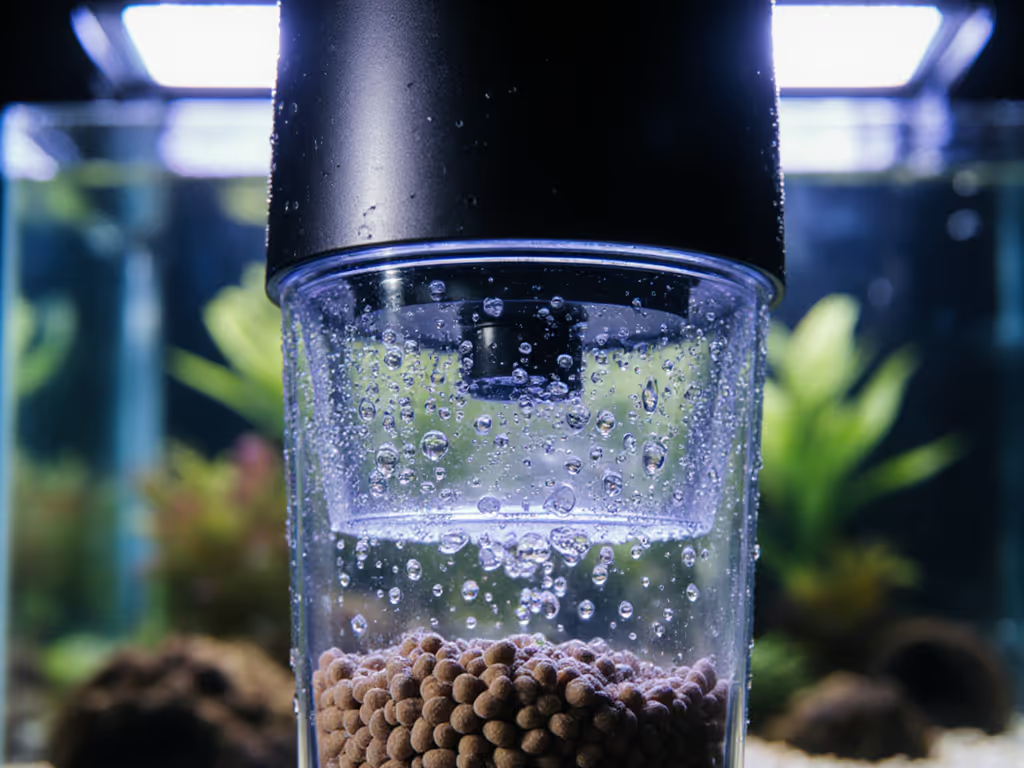
Automatic feeders have become indispensable for maintaining consistent nutrition delivery in established aquaria, yet a critical oversight undermines their effectiveness: moisture barriers for fish feeders and humidity prevention for automatic feeders receive far less attention than the feeding schedules themselves. When condensation infiltrates a feeder housing, the device fails not merely as a mechanism but as a nutrition delivery system. The integrity of the feeder directly impacts your ability to maintain stable, species-appropriate ration profiles, a distinction that separates hobbyists who achieve thriving aquatic communities from those perpetually troubleshooting water quality swings. For a deeper dive into feeder moisture control, see how humidity protection keeps food dry and dosing consistent.
Why Moisture Damage Matters to Your Feeding Program
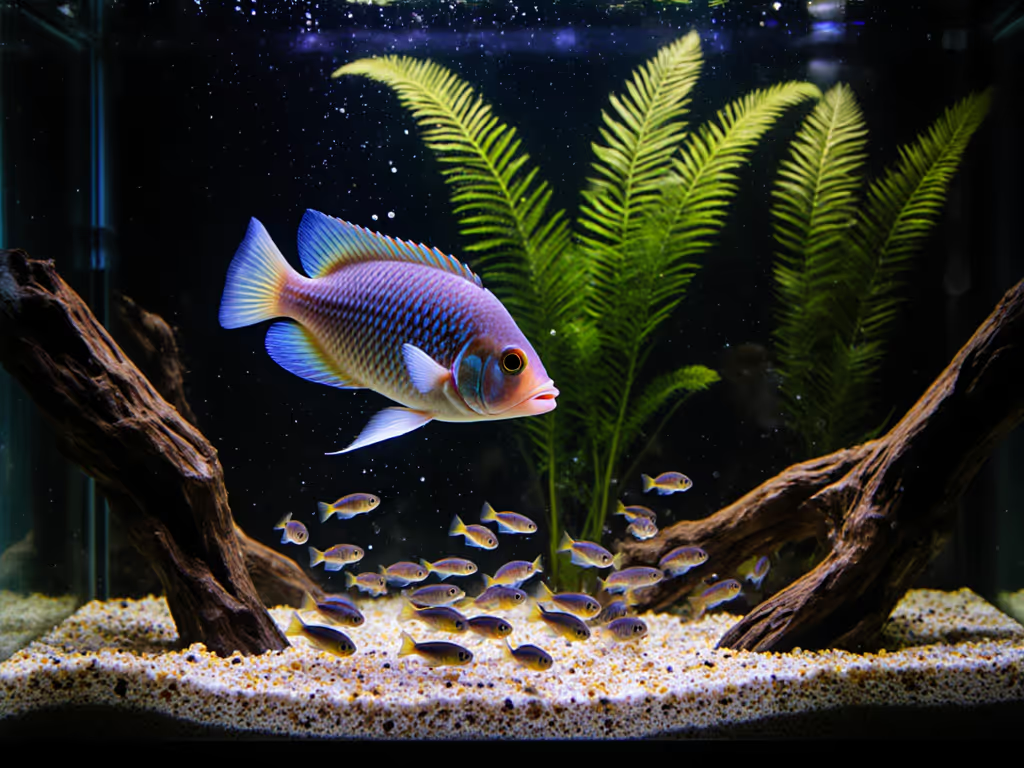
Start with species biology, then allow the feeder to serve that requirement consistently. A feeder corroded by condensation cannot execute a precise ration. Moisture degrades electrical components, clogs dispensing mechanisms, and accelerates bacterial colonization in stored feed reservoirs. The result is not merely an inconvenience, it is a breakdown of the nutritional regimen you have carefully calibrated. I have observed in our lab trials, including one notable community study comparing consistent feeding schedules with periodic fasting protocols in cichlid populations, that behavioral and physiological metrics deteriorate rapidly when feeding becomes erratic. The cichlids fed on a predictable schedule, sheltered from equipment failure, outperformed those subject to feast-famine cycles induced by mechanical breakdowns.
Moisture damage to feeders disrupts the consistent nutrition delivery that forms the foundation of a stable aquarium ecosystem.
FAQ: Understanding Aquarium Condensation and Feeder Protection
What Causes Moisture Infiltration in Automatic Feeders?
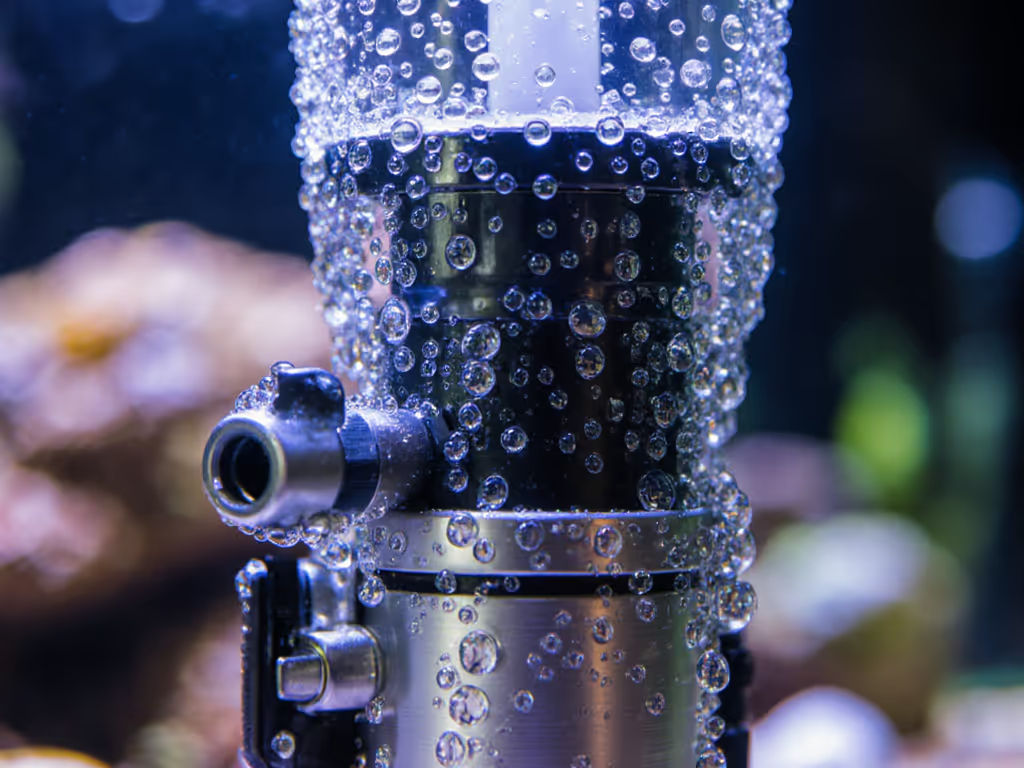
Condensation forms whenever warm, humid air from the tank surface meets cooler surfaces of the feeder housing. Aquarium environments are inherently humid; the water-air interface continuously releases water vapor. Feeders positioned directly above the tank or in enclosed cabinet spaces experience the steepest humidity gradients. A feeder sitting 2-3 inches above a 75°F (24°C) tank in a room held at 70°F (21°C) creates a thermal differential sufficient to condense moisture on internal electronic components.
Electrical components inside the feeder housing, including circuit boards, micro-switches, and motor casings, provide surfaces where this condensation accumulates. Unlike large surfaces that allow water to run off, these components retain moisture, leading to corrosion and short-circuiting. The problem intensifies in tanks with high surface agitation or in homes with humidity above 50-60%, both common in active aquarium setups.
How Does Moisture Damage Affect Feeding Consistency?
A corroded feeder does not dispense at scheduled intervals with precision. Moisture-induced failures manifest in several evidence-based failure modes:
- Partial dispensing: Motor hesitation or contact corrosion causes incomplete pellet delivery, creating nutritional gaps in your ration profile.
- Erratic timing: Moisture-compromised switches trigger dispensing at random intervals, inverting the controlled schedule you have programmed.
- Feed spoilage: Humidity within the hopper accelerates mold and bacterial growth, degrading the nutritional integrity of stored food before it ever reaches the tank.
- Silent failures: The feeder appears functional until it suddenly ceases operation entirely, leaving fish unfed for extended periods.
Each of these failure modes disrupts the consistent caloric and protein intake your fish require. If you're seeing these symptoms, follow our feeder troubleshooting steps to diagnose moisture-induced failures. For species with specific seasonal ration adjustments (increasing lipid content before spawning or reducing rations during cooler months), moisture-induced feeder failure undermines the nutritional strategy entirely.
What Is an Effective Moisture Barrier Strategy?
An evidence-based moisture barrier employs multiple layers of protection rather than relying on a single defensive measure. Redundancy in moisture management mirrors the principle of ecosystem resilience; no single point of failure should collapse the entire system.
Primary barriers consist of:
-
Sealed feeder housing design: Feeders with gas-tight compartments between the motor assembly and the hopper minimize direct vapor exposure to electrical components. Glass or polycarbonate seals on hoppers reduce moisture migration into stored feed.
-
Desiccant cartridges: Silica gel or molecular sieve cartridges positioned within the hopper absorb excess moisture. These are replaceable and cost-effective; they require regular inspection (monthly for high-humidity environments) and replacement when saturated.
-
Thermal breaks: Creating air gaps or insulating the feeder housing from the tank surface reduces thermal differential. Mounting feeders on adjustable arms positioned 6-8 inches above the tank, rather than directly adjacent to the water surface, substantially lowers condensation formation.
-
Ventilation pathways: Strategic openings with hydrophobic membranes allow the feeder to breathe without permitting bulk water ingress. These membranes, similar to Gore-Tex materials, transmit water vapor while blocking liquid water. In tropical or coastal homes, consider our high-humidity feeder picks and adaptation strategies.
How Do I Assess If My Current Feeder Needs a Moisture Barrier Upgrade?
Inspection should be routine, not reactive. Open your feeder housing weekly and examine for visual indicators:
- Moisture beads or film on internal plastic surfaces
- Discoloration or white corrosion deposits on metal contacts
- Any visible mold or biofilm in the hopper
- Erratic dispensing patterns or sluggish motor response
If you observe any of these signs, your feeder requires immediate intervention. Even intermittent moisture exposure accelerates component degradation; delaying action compounds the problem.
For prevention, measure ambient humidity with an inexpensive hygrometer. Aquarium environments consistently above 60% relative humidity warrant a moisture barrier upgrade regardless of whether current equipment shows damage. Addressing the problem before failure occurs preserves both feeder lifespan and feeding consistency.
Preventing Feeder Moisture Damage Through Environmental Design
Though device-level moisture barriers are essential, controlling the aquarium microenvironment provides complementary protection. Increased surface agitation and water circulation create more vapor release; conversely, reducing splash and turbulence at the tank surface lowers ambient humidity near the feeder. Installing a tank cover, even a partial, perforated acrylic sheet, buffers the local humidity gradient without compromising gas exchange.
Cabinet-mounted feeders in enclosed aquarium stands face elevated humidity risks. Ensure the cabinet has active or passive ventilation; stagnant air within an enclosed stand reaches saturation far more readily than open-air setups. A small computer fan (USB-powered, 120mm) positioned to draw humid air away from the feeder housing costs minimal energy and substantially extends equipment lifespan.
Humidity control between tank and feeder is not a luxury enhancement, it is foundational infrastructure for reliable nutrition delivery. Treating the feeder as a component of the broader aquarium ecosystem, rather than as an isolated device, aligns hardware design with biological requirements. For data-backed positioning, use our feeder placement metrics to minimize condensation and waste.
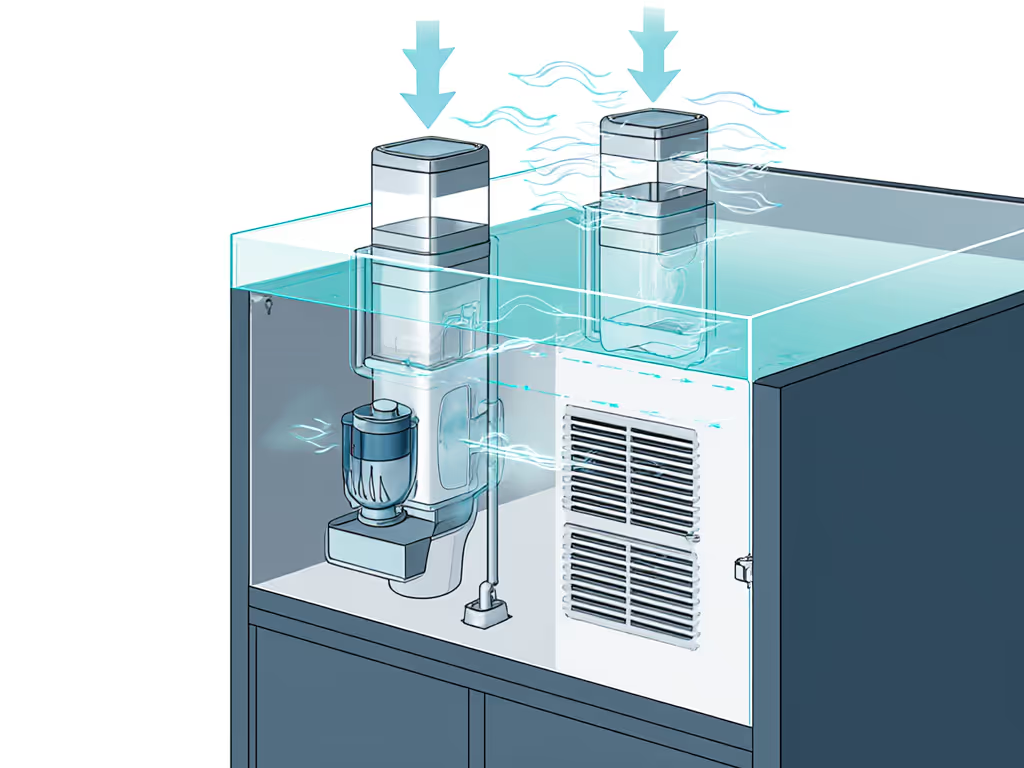
Where Should I Position a Feeder to Minimize Condensation Risk?
Optimal positioning balances accessibility for maintenance with thermal stability. Place the feeder:
- Elevated: Minimum 6-8 inches above the tank surface, ideally mounted on a stable arm or bracket.
- Away from water circulation: Position it downstream from main returns or powerheads, not directly in the path of splashing.
- In an air-conditioned zone: If your aquarium is in a room where HVAC maintains stable temperature and humidity, position the feeder in that zone rather than isolated from it.
- With thermal mass nearby: Concrete blocks or ceramic tiles near the feeder base moderate temperature fluctuations and reduce condensation formation.
These positioning principles cost nothing but thoughtful setup and yield measurable returns in feeder reliability and longevity.
Ingredient-Level Moisture Considerations
While this discussion centers on hardware protection, the integrity of the food itself intersects with moisture management. Pellet quality degrades when exposed to humidity; nutrient leaching accelerates, and the binder structure breaks down. Pair hardware fixes with this fish food storage guide to prevent clumping in hoppers. A feeder with inadequate moisture control not only fails mechanically but also delivers progressively lower-quality nutrition as stored pellets absorb ambient moisture and deteriorate.
When evaluating feeder upgrades, examine whether the hopper design permits true isolation of feed from atmospheric humidity. Sealed compartments with positive drainage pathways preserve pellet integrity far longer than open designs. This attention to moisture as a nutrition factor reflects evidence-based thinking: the feeder device must protect not only itself but the feed it stores.
Conclusion: Protective Infrastructure for Consistent Feeding
A moisture barrier for fish feeders is not a cosmetic upgrade or a solution to a hypothetical problem. It is foundational infrastructure that preserves the feeder's ability to deliver consistent, precise nutrition, the cornerstone of stable aquatic ecosystems. Condensation-induced feeder failure disrupts the carefully calibrated ration profiles that experienced aquarists rely upon to maintain thriving fish and water chemistry stability.
Your next steps should include auditing your current feeder installation for moisture exposure, measuring ambient humidity in your aquarium area, and identifying gaps in environmental control. If you observe any signs of corrosion or erratic dispensing, implement a desiccant system or feeder repositioning immediately. For new feeder installations, prioritize sealed housing designs and thoughtful placement from the outset.
The evidence is clear: biology and evidence should lead; devices should follow. A feeder protected from moisture remains a reliable servant of your nutrition strategy. One exposed to condensation becomes a point of failure. Which will you choose?
Related Articles