Predator-Prey Feeding Schedules To Mimic Wild Fish Diets
By Arjun Mehta • 21st May
Natural predation cycle feeding and a well-designed predator-prey feeding schedule are two of the most powerful tools you have if you want to mimic wild feeding patterns and see truly natural fish feeding behavior in glass boxes. Done right, they give you lean, active fish, stable water, and less drama. Done wrong, they create ammonia spikes, aggression, and stressed, overfed stock. If your aquarium is newly cycled, follow our new tank feeding schedule to avoid ammonia spikes before increasing frequency.
This FAQ is a schematic, metric-driven guide to building biological rhythm feeding into your tanks so your fish eat like they would in the wild (without turning your system into a nutrient bomb).
What is "natural predation cycle feeding" in an aquarium context?
In the wild, most fish don't graze from a buffet. They feed in pulses:
- Dawn and dusk peaks for many schooling and reef fish
- Opportunistic strikes for predators when prey density is high
- Fasting windows when conditions are poor or prey hides
Natural predation cycle feeding in aquaria means recreating those pulses and gaps instead of feeding one or two big, random dumps of food per day.
In practice, that usually looks like:
- Multiple micro-feedings for "prey" species (tetras, rasboras, small reef fish)
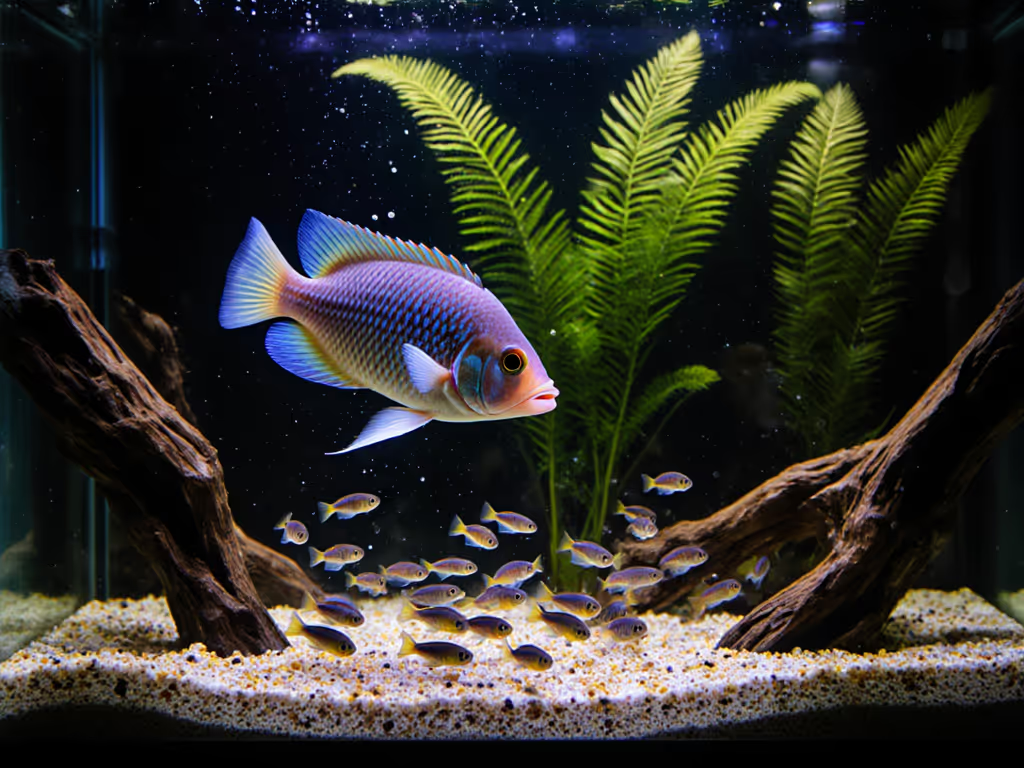
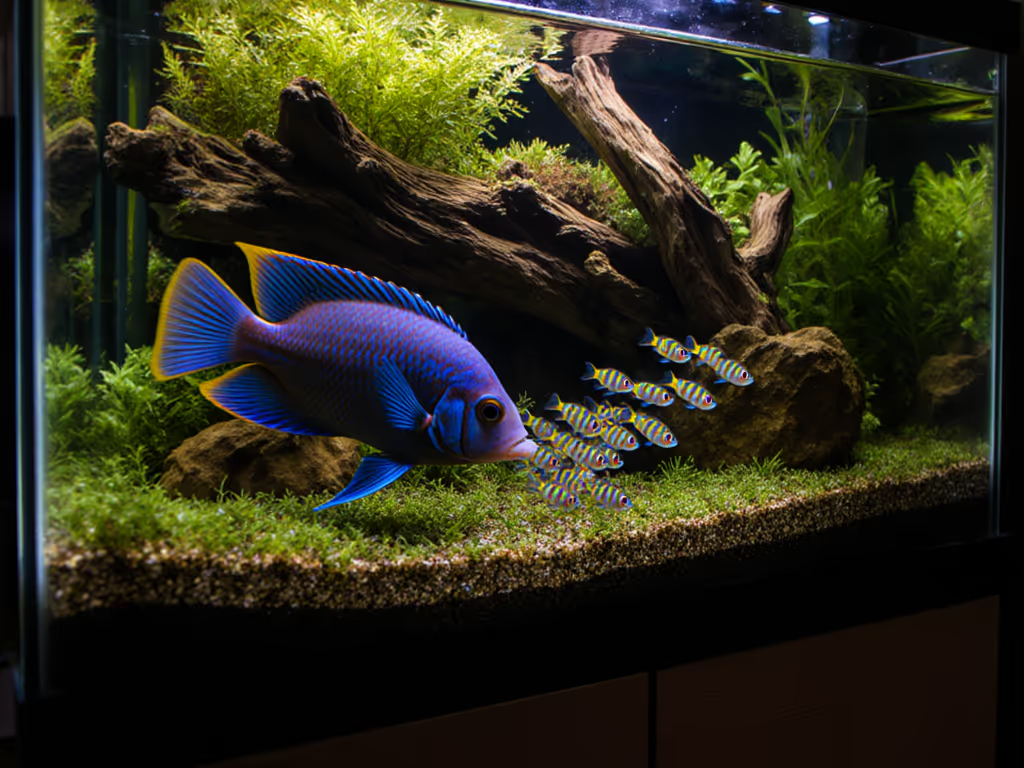
- Less frequent, higher-impact feedings for predators (cichlids, puffers, groupers, lionfish)
- Short, deliberate fasting windows (12-48 hours depending on species and age) that match wild patterns, not starvation
The key is designing a predictable pattern that your fish entrain to, and then dosing food precisely enough that your filter and biofilm can keep up.
Precision, not volume, is what makes natural predation cycle feeding safe in closed systems.
Why bother mimicking wild feeding patterns at all?
Three reasons, all measurable:
-
Behavior
Fish that feed in realistic pulses show more natural fish feeding behavior: shoaling, hunting, foraging, and courtship. You often see tighter schooling before a known feeding window and calmer behavior after. -
Physiology
Many species digest more efficiently when feeding aligns to circadian and ultradian rhythms. Lab work on multiple freshwater and marine species shows: For programming based on daily biology, see our auto-feeder circadian rhythms guide.
- Better feed conversion ratio when rations are split into smaller, predictable events
- Lower post-feeding ammonia output per gram of food when fish are not binge-feeding
- System stability
When you spread the same daily ration over several events, your:
- Ammonia peaks are lower
- Dissolved oxygen dips are less severe
- Skimmer and biofilter see steadier loading instead of one huge pulse
For a typical stocked display, distributing the daily ration over 3-6 micro-feeds can cut your peak ammonia by 30-50% compared to a single dump, assuming the total daily grams of food stay constant. Dive deeper into how precise feeding stabilizes water quality in our science-backed feeding guide.
How do I read my tank's "biological rhythm" around feeding?
Before you redesign anything, instrument your system (even if it's just a notebook).
Track for 7-14 days:
- Time of each feeding (to the minute)
- Approximate ration (e.g., "1/2 tsp pellets, ~0.8 g")
- Behavioral markers
- Time to first strike (seconds from food entering water until first bite)
- Time to clear the water column (seconds until no visible food)
- Any aggression or surface gasping
- Water metrics
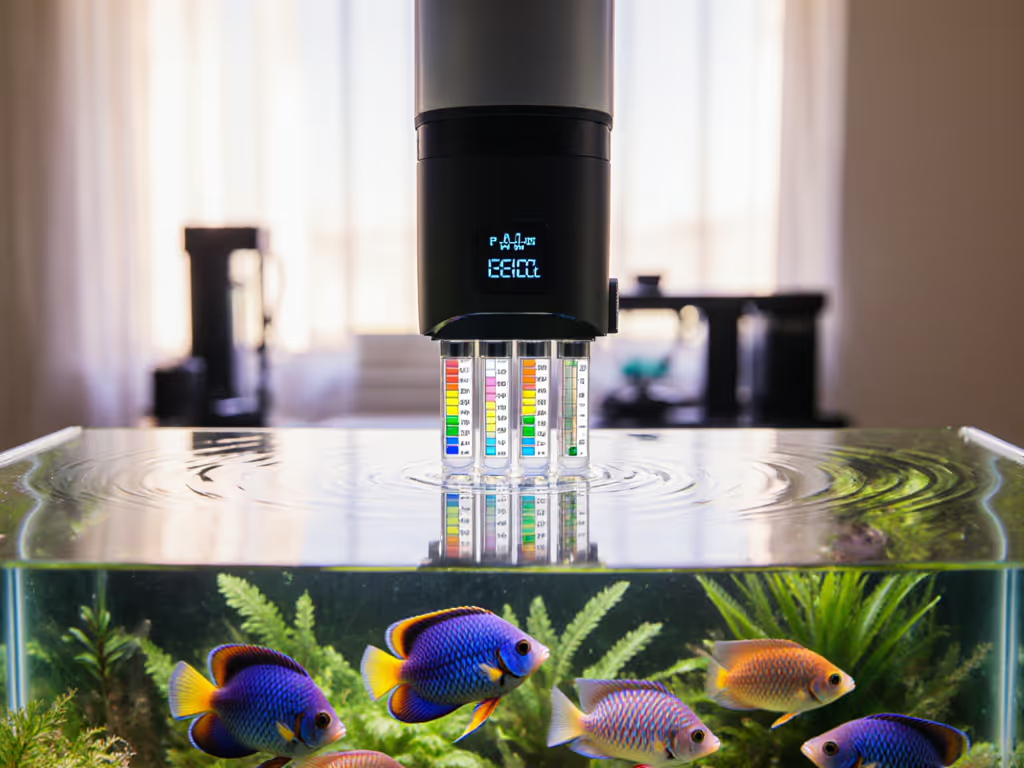
- NH₃/NH₄⁺, NO₂⁻, NO₃⁻ at consistent times (e.g., pre-feed, 1 hr post, 12 hrs post)
- If you have a DO or ORP probe, log those as well
Patterns to look for:
- Fish begging way before lights on or off → your biological rhythm feeding window is shifted relative to their expectation
- Food still drifting after 60-90 seconds → ration too large for that event
- Spike in aggression right before predictable feed → prey species underfed or predator feeding too rarely
Once you know your tank's baseline, you can shift toward a predator-prey feeding schedule without flying blind.
How do I design a predator-prey feeding schedule for my specific fish?
Treat this like designing a dosing regimen.
1. Set daily ration by biomass
As a coarse starting point:
- Active omnivores / small "prey" fish: 1-2% of body weight per day
- Large predatory fish: 0.5-1.5% of body weight per day
(juveniles on the higher side, adults on the lower)
If you don't know exact biomass, estimate based on length and species, then refine by observing body condition over 4-6 weeks.
2. Split the day into prey and predator windows
For a mixed tank:
-
Prey window (3-6 events/day)
-
Example: 08:00, 12:00, 16:00 micro-feeds
-
Each event: only what they clear in 30-45 seconds
-
Predator window (1-2 events/day)
-
Example: 19:30 target feeding after lights dim
-
Use tongs or feeding stick to deliver food near the predator, not in the general water column
This recreates the wild pattern in which small fish graze and dash most of the day, while the main "kill" events from larger fish are short and intense.
3. Build in controlled fasting, not neglect
For predatory fish feeding schedules, most adult predators benefit from:
- 1 fasting day per week for moderately fed adults
- No more than 48 hours without food unless you're treating a specific medical issue under guidance
For small schooling fish, fasting should be rare and brief (e.g., skipping one feeding block, not entire days) unless your nitrate is chronically high and you're recalibrating rations.
Never use starvation as a behavior "fix" for aggression; you'll usually get the opposite.
How do I prevent aggression when simulating predation?
Paradoxically, a realistic predator-prey feeding schedule can reduce aggression if you control the variables.
Key controls:
- Predictability
- Feed predators at consistent times so they learn when the hunt happens.
- Many cichlids and other predators show calmer patrol behavior when they can anticipate a window.
- Targeted delivery
- Use tongs, tubes, or feeding rings to create separate feeding zones.
- Prey species get diffuse micro-food in the upper water column.
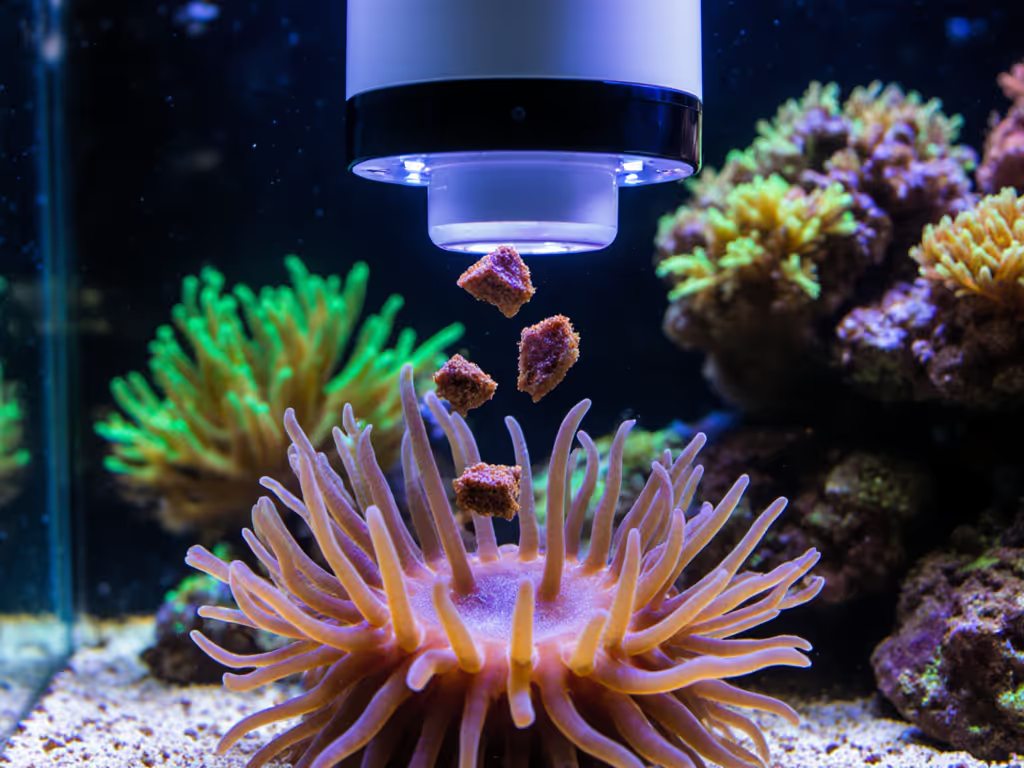
- Predators get discrete chunks where they can strike without mowing down tank mates. For setup and placement tips, see our feeding ring guide.
- Density and refuge
- In community setups, maintain adequate plantwork, rockwork, or caves so smaller fish can avoid line-of-sight during predator events.
If you see fin damage or chronic bullying outside feeding windows, that's a stocking or territory problem, not just a feeding schedule issue.
Can automation actually handle this, or is it all manual?
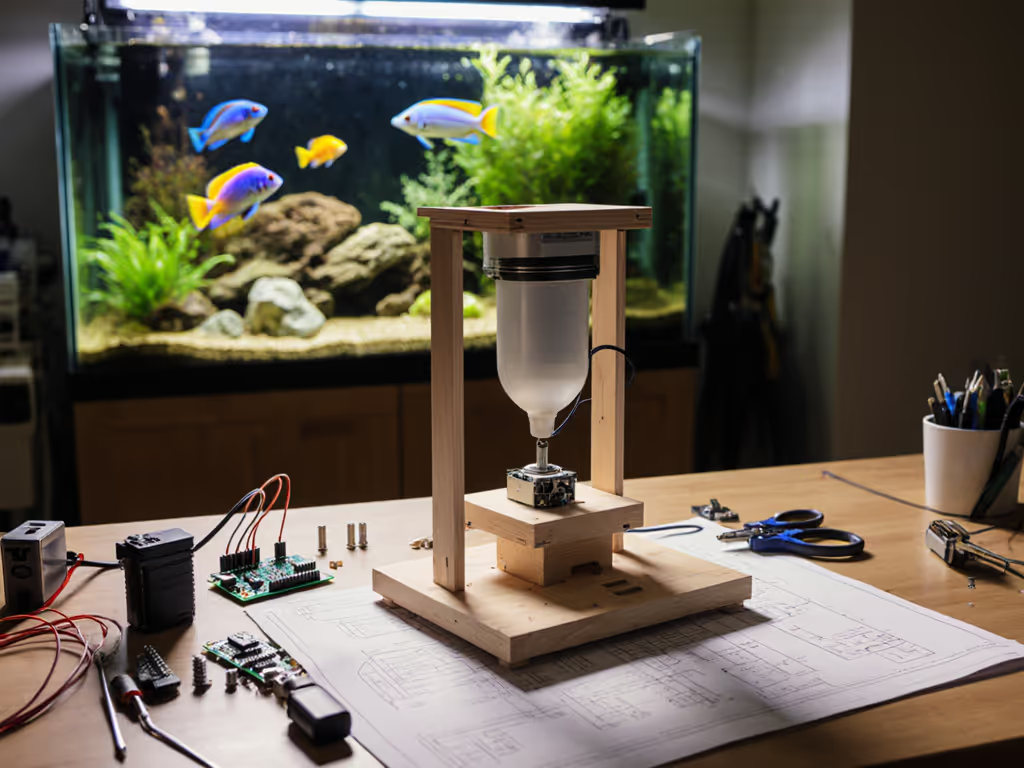
You can get very close to wild-like patterns with automation, and you should if you travel or run multiple tanks.
Think in layers, not gadgets:
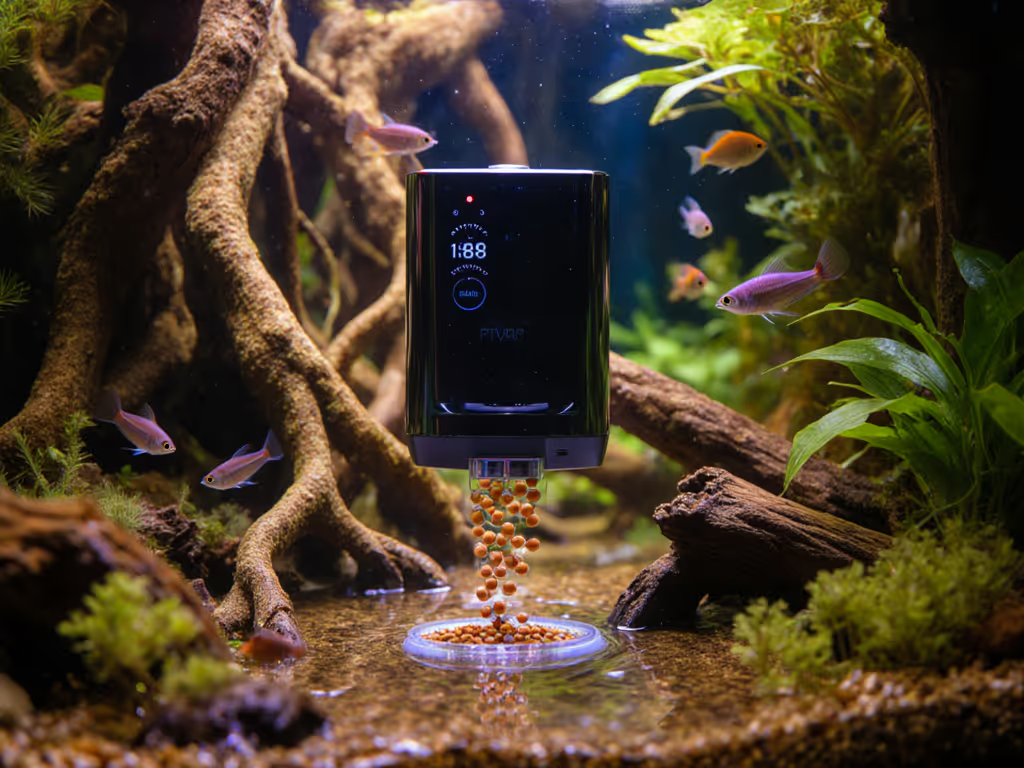
- Primary micro-feeder
- Handles prey-side micro-feeds (3-6 small events/day).
- Programmed for seconds-of-run-time, calibrated against a gram scale so you know, for example: "3 seconds = 0.25 g of pellets."
- Secondary, lower-frequency delivery
- For predators, I prefer manual or semi-manual (frozen/thawed, tongs, etc.).
- When away, you can approximate with slightly larger automated feeds on a separate timer channel and careful portioning.
- Redundancy and safeguards
After an early auto-feeder of mine dumped a long weekend's ration in one shot and crashed a tank, I stopped trusting single points of failure:
- Use multiple shorter feed events instead of one large event; if a clog clears, the damage is limited.
- Keep mechanical timers or controller failsafes so a stuck-on feeder can't run continuously.
- Pair feeding with monitoring: ammonia alerts, pH/ORP probes if available.
Feed like a system, never a hopeful guess.
Automation's job here is not "set and forget"; it's to repeat precise, measured doses so your biological plan actually survives contact with real life.
How do I avoid overfeeding when increasing feeding frequency?
You don't raise the daily grams, only the number of slices.
Implementation:
-
Lock a daily budget
Decide: "My tank gets 2.5 g/day of dry food equivalent." -
Divide, don't add
- If you used to feed 2.5 g once daily, switch to 0.8 g x 3.
- Watch how quickly each portion disappears; fine-tune down if food is visible after 60 seconds.
- Validate with water tests
For the first 2-3 weeks after changes, log:
- NH₃/NH₄⁺ 1 hour after the largest feeding
- NO₃⁻ twice weekly
If nitrate is steadily climbing with no other changes, your "budget" is still too high for your export (water changes, plants, skimmer, etc.). Reduce total daily grams by 10-15%, hold for two weeks, and re-evaluate.
Remember:
Precision, not volume, is what makes natural predation cycle feeding safe in closed systems.
Can this work in peaceful community tanks without actual predators?
Yes. You don't need a literal predator to borrow the pattern.
For community tanks with no big hunters:
- Let "feeding events" stand in for predation pulses.
- Slightly larger event near dusk: mimic a "high activity" period.
- Smaller events at mid-day.
- Use different food types to cue different behaviors:
- Fine granules or powdered foods for mid-water shoalers.
- Sinking wafers later for catfish and loaches.
You still get the benefits:
- Clearer daily rhythms in fish activity
- Better digestion from predictable feeding windows
- Smoother loading on your filtration
The behavioral enrichment alone (shoals tightening before known feeds, bottom dwellers emerging on schedule) is worth the effort.
What's a concrete, step-by-step plan to switch my tank over?
Use this as a 4-week rollout template.
Week 1: Measure
- Log current feeding times, amounts, and clearance time.
- Test NH₃/NH₄⁺ and NO₃⁻ at your usual times.
Week 2: Slice the ration
- Keep total daily grams the same.
- Split into 3-4 events instead of 1-2.
- Adjust per event so food clears in <45 seconds.
Week 3: Add predator/prey structure
- If you have predators:
- Move their main feeding to a predictable dusk or late-evening window.
- Keep smaller fish on micro-feeds earlier in the day.
- Add one short fasting window for adult predators (24 hours once per week).
Week 4: Automate and refine
- Program auto-feeders for the micro-feed schedule you validated manually.
- Calibrate run-times to grams using a scale. Step-by-step instructions are in our feeder calibration setup guide.
- Set controller or timer safeguards to prevent runaway feeding.
- Re-test water; adjust total daily ration by ±10-15% based on nitrate trend and body condition.
If you iteratively log, adjust, and re-log, you'll end up with a predator-prey feeding schedule that feels "wild" to your fish and stable to your test kits.
When your shrimp are grazing normally, your schooling fish are tight but not frantic, and your predators strike hard then settle instead of pacing all day, you'll know the system is doing the heavy lifting.
Related Articles